Last updated November 18, 2026




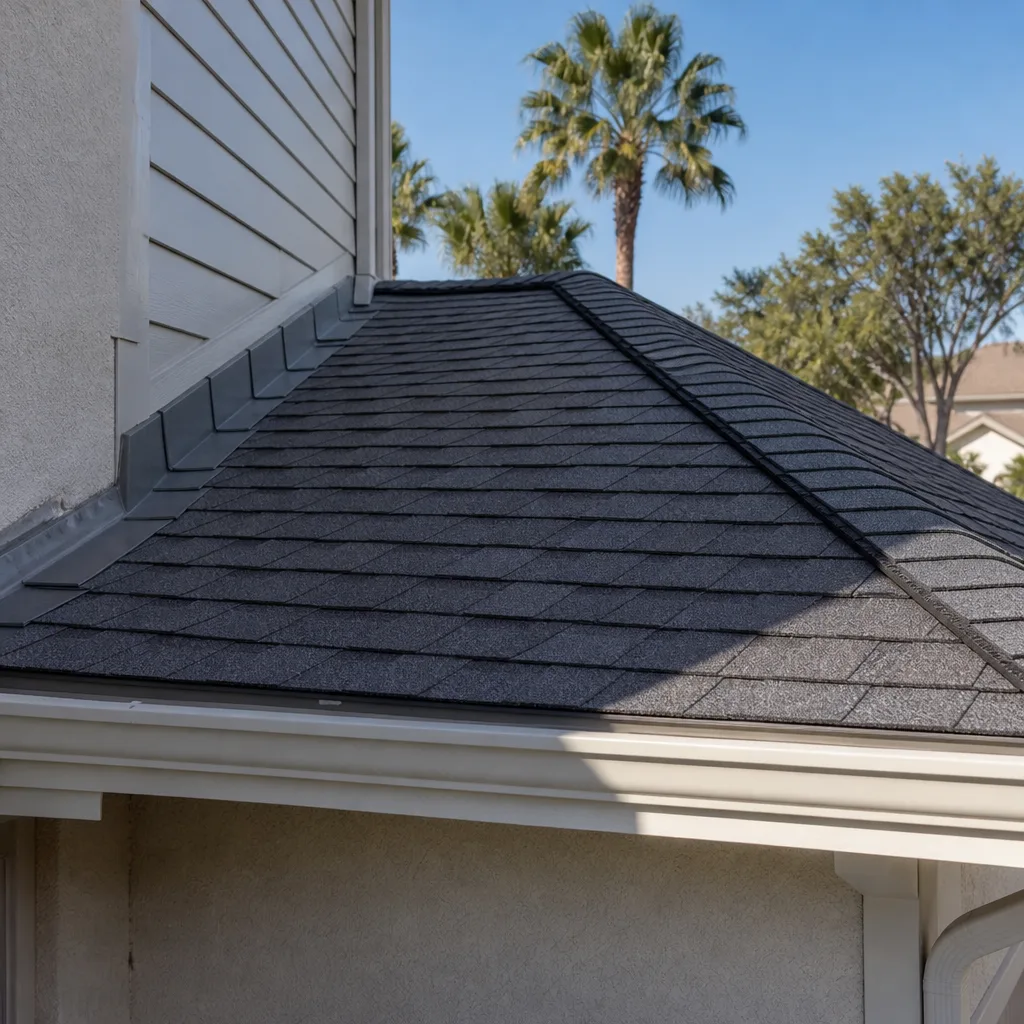
Free written scope consultation - allowances, timeline, and change-order rules on paper before a single trade is scheduled
Construction Warning Signs: A Boulder City Homeowner’s Reference Guide
A diagonal crack at the corner of a window in Boulder City is rarely a framing problem. Nine times out of ten, it’s telling you something about what’s under the slab, not what’s above it. That single misread costs homeowners twice: once for the wrong repair, and again when the real cause keeps working. Reading warning signs correctly means reading them locally, because the same crack means different things in caliche soil than it does in a clay suburb back east. This guide walks through what to look for, what each sign actually indicates, and when it’s time to get a professional eye on the problem.
Quick Answer
Construction warning signs on a Boulder City home are usually soil-movement symptoms, moisture symptoms, or material-failure symptoms, and each shows up differently here than in wetter climates. Diagonal stucco cracks near openings, efflorescence that reappears on block walls after rain, and gaps that open and close with the seasons most often point to caliche subgrade movement and thermal cycling, not structural failure. The signs worth acting on are the ones that are progressing: widening cracks, recurring efflorescence, and any separation at a fastener or adhesive joint.
Styles & brands we work with
- Kitchen remodeling
- Bathroom remodeling
- Home additions & ADU
- Roofing
- Windows & doors
- Driveway & pavers
- Fence
Table of Contents
- How to Read Cracks in Stucco, Concrete, and Masonry
- Thermal Expansion Gaps vs. Fastener and Adhesive Failure
- Early Signs of Caliche-Related Foundation Movement
- Efflorescence on Block Walls and Pavers
- Post-Monsoon Inspection: What to Check Before Next Season
- Driveway, Paver, and Flatwork Warning Signs
- Roof, Window, and Door Warning Signs
- How to Document a Warning Sign Before You Call Anyone
How to Read Cracks in Stucco, Concrete, and Masonry
Crack patterns are diagnostic. A crack’s direction, width, location, and whether it’s moving tell you far more than the crack itself. In Boulder City, the desert soil profile changes how those patterns read.
Stucco cracks are the most commonly misread. Hairline cracks in a spiderweb pattern across a broad wall face are typically shrinkage and thermal movement, and they’re cosmetic. A crack that runs diagonally from a window or door corner outward is different: it usually follows a stress concentration, and the question becomes what’s moving to create that stress. Under a Boulder City slab that’s often differential settlement of a caliche layer that wasn’t uniformly prepared at original construction.
Concrete flatwork cracks fall into predictable categories:
- Control joints opening are designed to move and are not a defect.
- Hairline map cracking across a slab face is typically surface shrinkage from rapid curing in dry heat.
- A single crack running corner to corner across a slab on grade usually indicates a point of restraint underneath, not a failing slab.
- Offset cracks, where one side of the crack sits higher than the other, are the ones that matter. Vertical displacement means the subgrade has moved.
Masonry cracks are slower to develop but more telling. A step crack that follows mortar joints up a block wall in a stair-step pattern is a classic differential movement indicator. Vertical cracks through block units themselves are less common and warrant a closer look. Horizontal cracks near the base of a wall are the highest priority: they can indicate lateral soil pressure or bearing failure, and they should be evaluated by a structural professional before anything cosmetic is done.
The practical rule: measure the crack now, note the date, and measure again in 60 to 90 days. A crack that is stable is usually a maintenance item. A crack that is wider by a sixteenth of an inch or more in that window is telling you something is still moving, and that’s when a call to a professional pays for itself. When you’re weighing repairs, the same diagnosis-first approach applies across the trades, whether it’s a foundation issue feeding into a home additions & ADU plan or a paver base that’s failed.
Thermal Expansion Gaps vs. Fastener and Adhesive Failure
Every exterior material on a Boulder City home moves. Desert temperature swings of 30 to 40 degrees between day and night are routine, and materials expand and contract on that cycle. A lot of what looks alarming is just physics. The trick is separating designed movement from failure, and there’s a visual difference if you know what you’re looking at.
Normal thermal movement looks like this:
- Gaps that open in summer heat and close back down when temperatures drop.
- Sealant joints that stretch and compress without pulling away from either substrate.
- Uniform gaps at deliberate expansion joints in concrete, siding, or trim.
- Gaps that stay the same width over a full year of seasonal cycling.
Fastener or adhesive failure looks different:
- Sealant that has pulled clean away from one side of a joint, leaving a smooth adhesive shadow on the substrate it failed to hold.
- A gap that keeps widening rather than cycling open and closed.
- Fastener heads that have backed out, leaving small rust rings or dimples in the finish.
- Lifting at the edges of a tile, paver, or panel, where one corner has released while the others still hold.
- Rattling, movement under hand pressure, or a hollow sound when tapped.
The distinction matters because the repair is different. A joint that cycles with temperature needs the right sealant and the right joint design. A joint that’s failing at the adhesive line needs the substrate and fastener checked, not just a fresh bead of caulk over the top. In this climate we’ve found that UV exposure accelerates sealant degradation on sun-facing walls, so south and west elevations age faster than shaded sides. Caulking over a failed adhesive joint is a short-term patch; it will open again by the next hot season.
Inside, the same failure pattern shows up in the bathroom. A tile that has begun to sound hollow or a grout line that keeps cracking can point to movement behind the surface, and that’s the kind of failure that a proper waterproofing layer, like a Schluter membrane system, is designed to prevent. We work with Schluter because the substrate detail is what prevents the failure, not the tile on top of it. Warning signs in a shower should always be read before the wall behind them is opened up.
Early Signs of Caliche-Related Foundation Movement
Caliche is a naturally cemented soil layer common across the Mojave, and it does not behave like ordinary dirt. It’s hard, it doesn’t drain uniformly, and it expands and contracts on its own schedule when moisture gets into it. That’s why Boulder City foundations can show movement patterns that would look alarming on a clay-soil property and read completely differently here.
The early signs most homeowners miss are subtle:
- Doors that stick only in certain seasons. A door that binds in late summer and frees up in winter is a seasonal movement pattern, not a warped door. Track it.
- Interior drywall cracks radiating from door and window corners. Drywall is the earliest indicator because it’s the least tolerant surface.
- Floor sloping or a hollow feel near the perimeter of a slab-on-grade home, especially at an exterior wall.
- Windows that don’t latch cleanly when they used to, on exterior walls specifically.
- New cracking at the stucco-to-foundation line, or a clean separation between a slab edge and the wall finish.
- Exterior walkway or patio slabs that have tilted toward the house rather than away from it, changing how water drains.
None of these, on their own, says the foundation is failing. What matters is the combination and the trend. A single cracked drywall corner that’s been there for years is a cosmetic item. Six of them appearing over two seasons is a movement pattern worth having evaluated.
The reason this matters more than it might elsewhere: Boulder City lots often have variable caliche depth, and where the layer sits close to finish grade, that variation can create a localized point of movement under one area of a slab. Water management is the best prevention. Once that drainage pattern changes for the worse, movement accelerates. Slope, gutters, and hardscape that sheds water correctly are doing more structural work than most homeowners realize.
Efflorescence on Block Walls and Pavers
Efflorescence is the white, chalky bloom that shows up on the face of concrete block, brick, and pavers. It’s salt that has migrated to the surface with moisture and dried there. In a wet climate it’s usually a maintenance nuisance. In Boulder City, it tells you something specific about where water is getting in, and when it comes back, it’s a moisture intrusion indicator, not a cosmetic one.
The mechanism is water plus salt plus evaporation. Desert soil and masonry both carry soluble salts. When water gets into the masonry and then evaporates off the face, the salt stays. That’s why efflorescence is so strongly tied to the way water finds its way into a wall or paver field in the first place.
How to read it:
- A single occurrence after a wet monsoon season that doesn’t return is typically superficial and can be brushed off. Cosmetic.
- A recurring bloom on the same wall, in the same spot, every season signals an ongoing moisture source behind the material. That moisture path needs to be found.
- Efflorescence accompanied by a dark damp patch or a musty smell is active intrusion, and it should be evaluated before it becomes a bigger repair.
- Efflorescence on the base of a retaining wall or the bottom course of a fence wall is often the sign that water is pooling against the base and wicking up, which is a drainage problem, not a masonry problem.
- Efflorescence under a paver field that reappears after rain usually points to the base profile holding moisture, and the paver field may need to be reset with proper drainage.
The best response to efflorescence isn’t a stronger sealer. It’s finding the water. Sealant on a wall that’s still taking on moisture will trap the problem instead of fixing it. We work with designer paver systems like Belgard and Unilock because the base and drainage detail under the pavers is what prevents the bloom from coming back, not the surface texture.
Post-Monsoon Inspection: What to Check Before Next Season
Monsoon season in the Mojave does what months of dry weather don’t: it loads every drainage path, roof detail, and slope with water all at once. The most useful habit a Boulder City homeowner can build is a post-monsoon inspection, done in the weeks after the season rather than the weeks before. You’re looking for what the water exposed, not what it’s about to do.
Walk the property in this order:
- Start at the roof edge. Look for lifted or missing shingles, granule loss, and any dark streaking that wasn’t there before the season. Check the flashing at every penetration, valley, and wall transition.
- Check the gutters and downspouts. If downspouts discharge right at the foundation, that’s a problem in any climate and a bigger one here, where the caliche can trap water against the slab.
- Look at the grade. Water should slope away from the house on all sides. Any pooling spots, soft soil, or new erosion channels after a big storm are your priority list.
- Walk the hardscape. Look for settled, heaved, or shifted pavers, new sand loss from joints, and any paver tilt that reverses a slope.
- Inspect the fence line. Post bases that have lifted, leaned, or become loose after the season are the earliest sign of a soil bearing issue, not a bad fence.
- Check every window and door perimeter on the exterior. Sealant joints that failed the season will open straight into the wall cavity. Interior, look for water stains, bubbling paint, and crusty white residue at the frame corners.
- Re-photograph every crack you were already tracking and compare it to the same measurement from before the season.
A sign that appears after the season that wasn’t there before is worth a professional look. The cost of finding the source of a water path now is smaller than the cost of the water path showing up as rot, mold, or a failing foundation later. The assessment is the cheap part. The repair that comes from ignoring it isn’t.
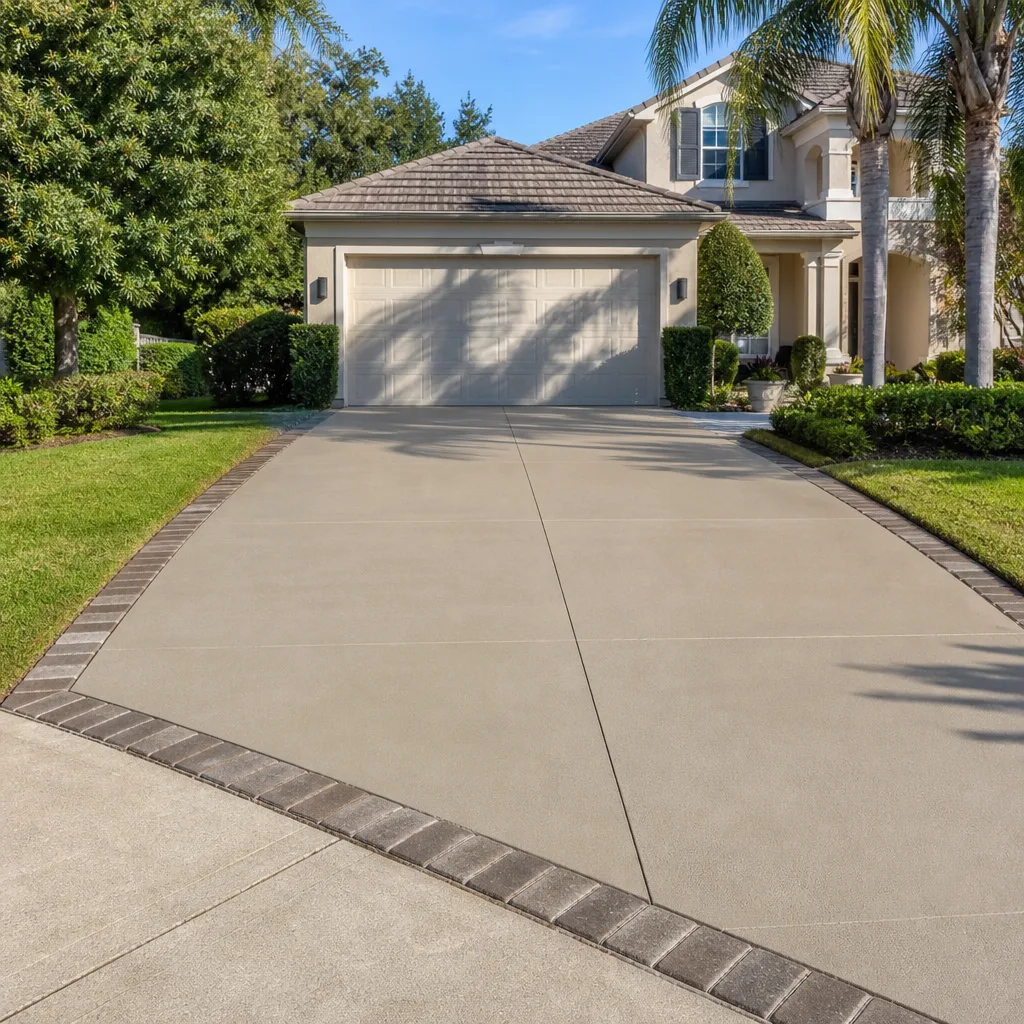
Driveway, Paver, and Flatwork Warning Signs
Driveways and pavers take the most abuse of any surface on a Boulder City property. Sun, heat, and the daily cycle of expansion and contraction stress every joint and seam. The signs worth acting on are the ones that suggest the base underneath is moving, not just the surface material.
Watch for these:
- Heaving or tenting, where a section of pavers lifts and rocks under foot. That’s a base failure or a tree root, and it won’t correct itself.
- Depressions forming where tires travel. Rutting in a driveway that appears within one or two seasons points to a sub-base that wasn’t built to depth.
- Sand loss from joints at a rate that keeps you refilling every season. Some sand migration is normal. Constant depletion means water is washing the bedding layer.
- Tile or paver edges lifting or rocking at the driveway apron, where the paving meets the street or the garage. That transition is where the base most often fails.
- New ponding spots after rain where water used to drain. The surface has changed slope, which means something underneath moved.
- Concrete spalling or flaking on a poured driveway, especially where salt or snow melt has been used. In this climate, spalling is more often caused by an over-wet mix at pour or by repeated thermal stress at a control joint.
The pattern behind most paver failures we see is a base that was built too thin or compacted unevenly. That’s why premium paver systems aren’t just about the surface look. We work with Belgard, Unilock, Techo-Bloc, and Cambridge Pavers because the depth and preparation requirements that come with those product lines are what hold the base up over time. If you’re weighing a repair against a reset, our driveway & pavers page walks through what a proper rebuild looks like.
Roof, Window, and Door Warning Signs
The building envelope is where small failures turn expensive. Roof, windows, and doors are the three places where a warning sign that gets ignored for one season turns into an interior repair by the next.
On the roof, the signs worth taking seriously are:
- Granule loss in the gutters or on the ground below downspouts, which means the shingle surface is aging faster than the rest of the roof.
- Curling or clawing shingle edges, especially on the south and west slopes that take the most sun.
- Lifted or missing shingles after a wind event, and any dark staining or streaking that trails down a slope.
- Visible daylight or water staining in the attic sheathing, which is often the first place a slow leak shows up.
- Sagging roof decking in the field, which can point to either moisture damage or a fastener issue.
On windows and doors, the highest-priority signs are:
- Water staining or softness at the interior frame and sill, which usually traces to a failed exterior sealant or flashing detail.
- Fogging between glass panes on a dual-pane unit, which means the seal has failed and the unit needs to be replaced, not just cleaned.
- Doors that drag or rub the frame only in certain seasons, which can indicate either hinge wear or a larger movement issue worth tracing back to the foundation section of this guide.
- Exterior sealant that has lost adhesion at the perimeter, which lets water straight into the wall cavity during a monsoon.
For a full roof or a window replacement, material choice determines both the lifespan and the appearance. We work with GAF, CertainTeed, Owens Corning, IKO, and Atlas shingles, and with window lines under manufacturer programs we’re authorized to install, because the warranty follow-through on a replacement is as important as the material itself. Our Boulder City Construction team handles the envelope work as one scope, so the roof flashing detail and the window sealant detail get repaired by the same crew and don’t get handed back and forth.
How to Document a Warning Sign Before You Call Anyone
Documentation saves money. When a contractor can see a crack’s progression, a stain’s spread, or a paver’s movement over time, the diagnosis is faster and more accurate. A few minutes of note-taking before the first call makes the whole process sharper.
Do this:
- Photograph the sign with something for scale. A coin or a ruler taped next to the crack gives you a reference point in the image.
- Write the date and the weather condition at the time of the photo. “After 2 inches of rain” or “mid-August, 105 degrees” tells the contractor a lot about what they’re seeing.
- Measure the width with a crack gauge if you have one, or note the width against a coin or key as a proportional reference.
- Note whether the sign is new or recurring. A first-time bloom after a heavy monsoon reads differently than the fifth recurrence in the same spot.
- List the other signs you’ve seen in the same area, even if unrelated on the surface. A sticking door plus a diagonal stucco crack plus a settled paver at the same exterior wall form a picture.
- Set a reminder to recheck in 60 to 90 days and photograph again at the same angle.
A clear record turns “something looks wrong” into a specific, trackable observation. That’s the difference between a contractor guessing on a site visit and a contractor arriving with the information to make a call. It also keeps you from being sold a repair for a sign that turns out to be normal thermal movement, or from dismissing a sign that turns out to be the first sign of the problem.
Common Mistakes to Avoid
- Treating a diagonal stucco crack as a framing issue. In Boulder City, the diagonal crack at an opening is more often subgrade movement than a framing defect. A framing repair without addressing the subgrade is money spent twice.
- Caulking over a failed adhesive joint. Sealant over a joint that’s pulled away from the substrate hides the failure for one season and returns it the next. Find the reason it failed before you reseal.
- Sealing a wall or paver field that’s showing efflorescence. Sealing traps moisture and makes the problem harder to diagnose later. Find the water path first.
- Assuming the slump or crack is normal because it “hasn’t gotten worse.” Movement is seasonal here. A crack that doesn’t progress for two months can still widen in the next wet season. Measure across a full cycle, not a single season.
- Ignoring grade and drainage after a monsoon. Most of the expensive signs on this list start with water finding a new path. The grade change is the cause; the crack is the symptom.
- Hiring the first contractor who calls a crack “normal settling” without documentation. A good contractor measures, photographs, and explains what would and wouldn’t change the diagnosis. A vague reassurance costs nothing to give and buys nothing.
- Patching a paver surface over a failed base. New pavers over a base that wasn’t rebuilt to depth will fail in one to two seasons. The repaving looks good right up until it doesn’t.
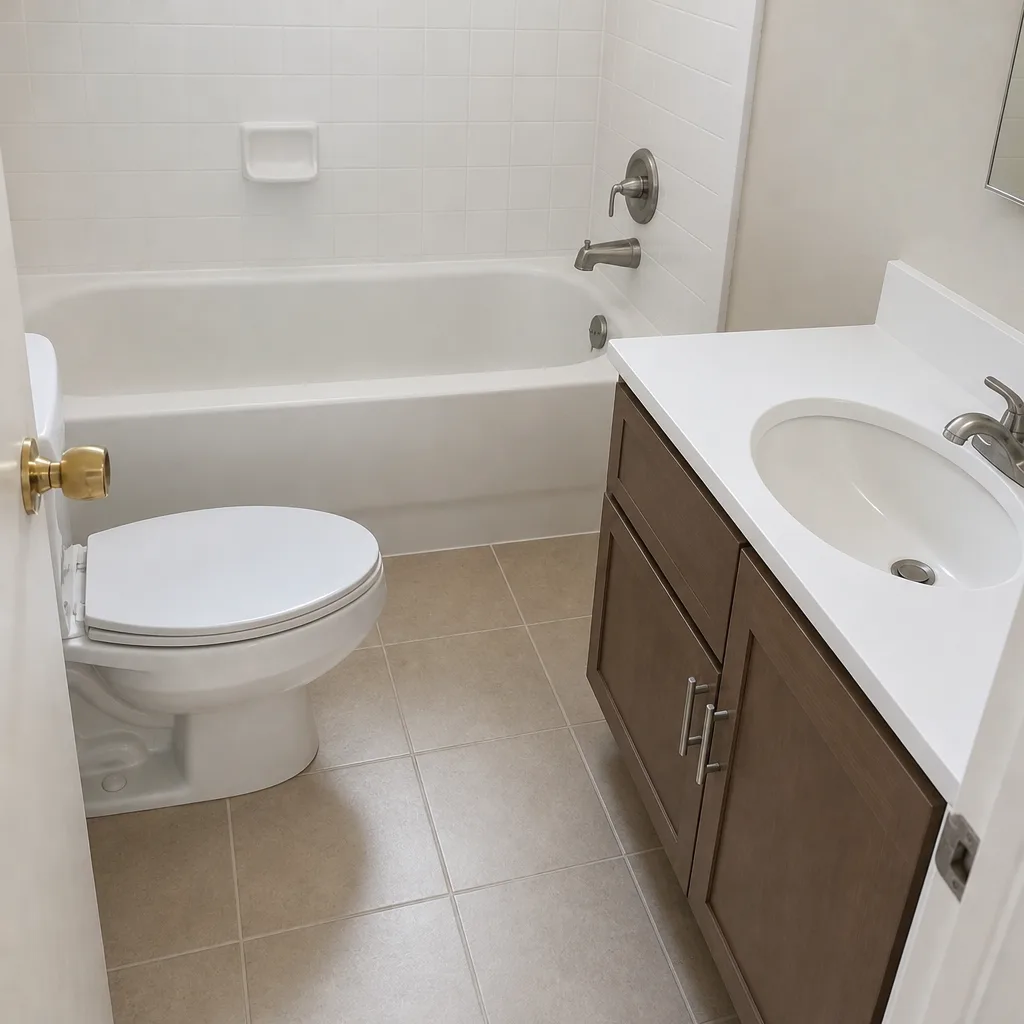
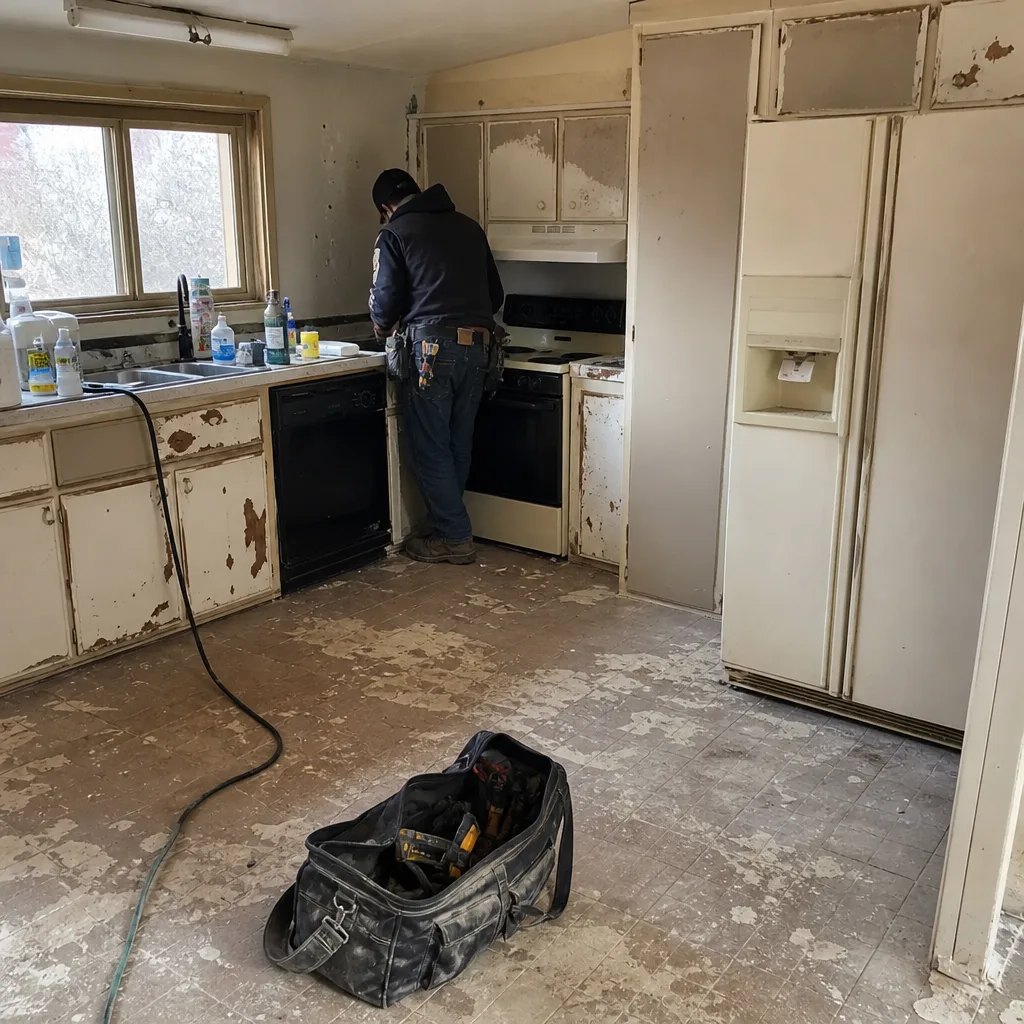
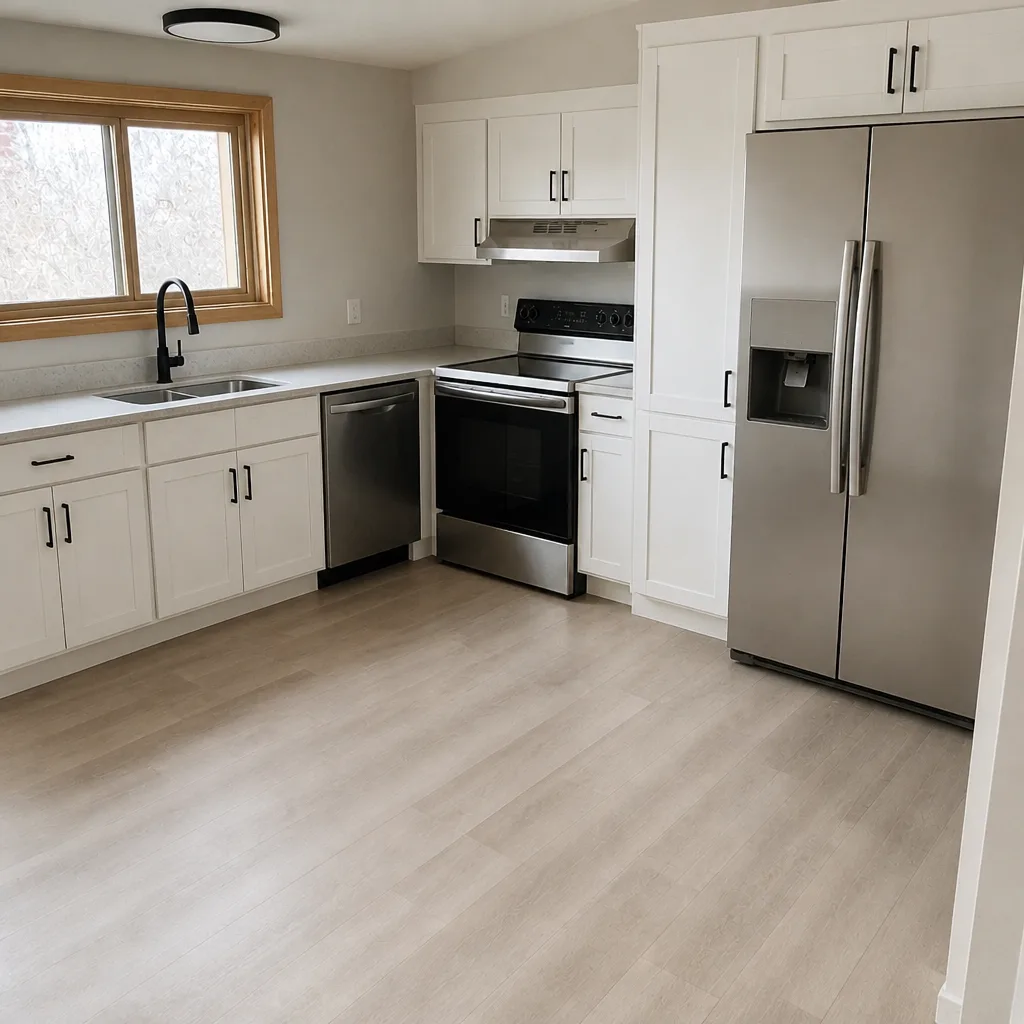
See the difference
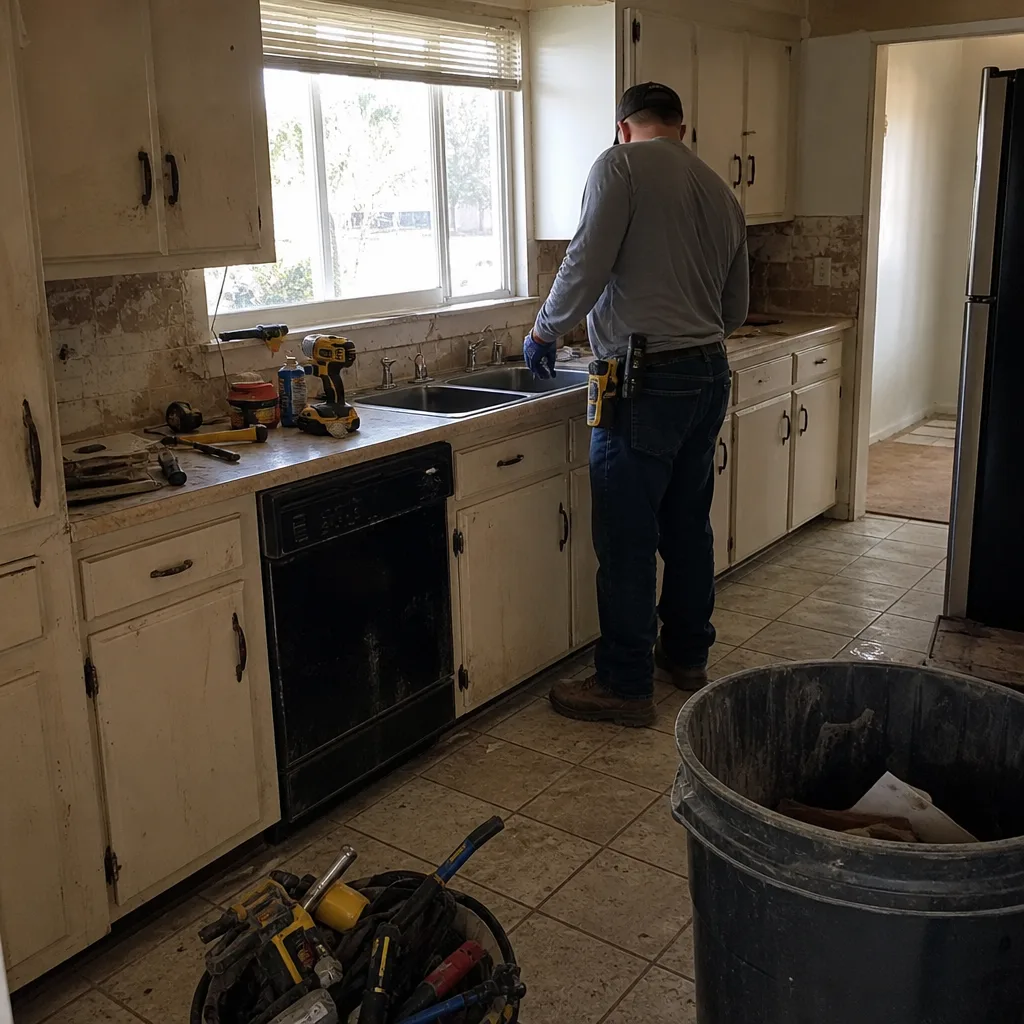 Before
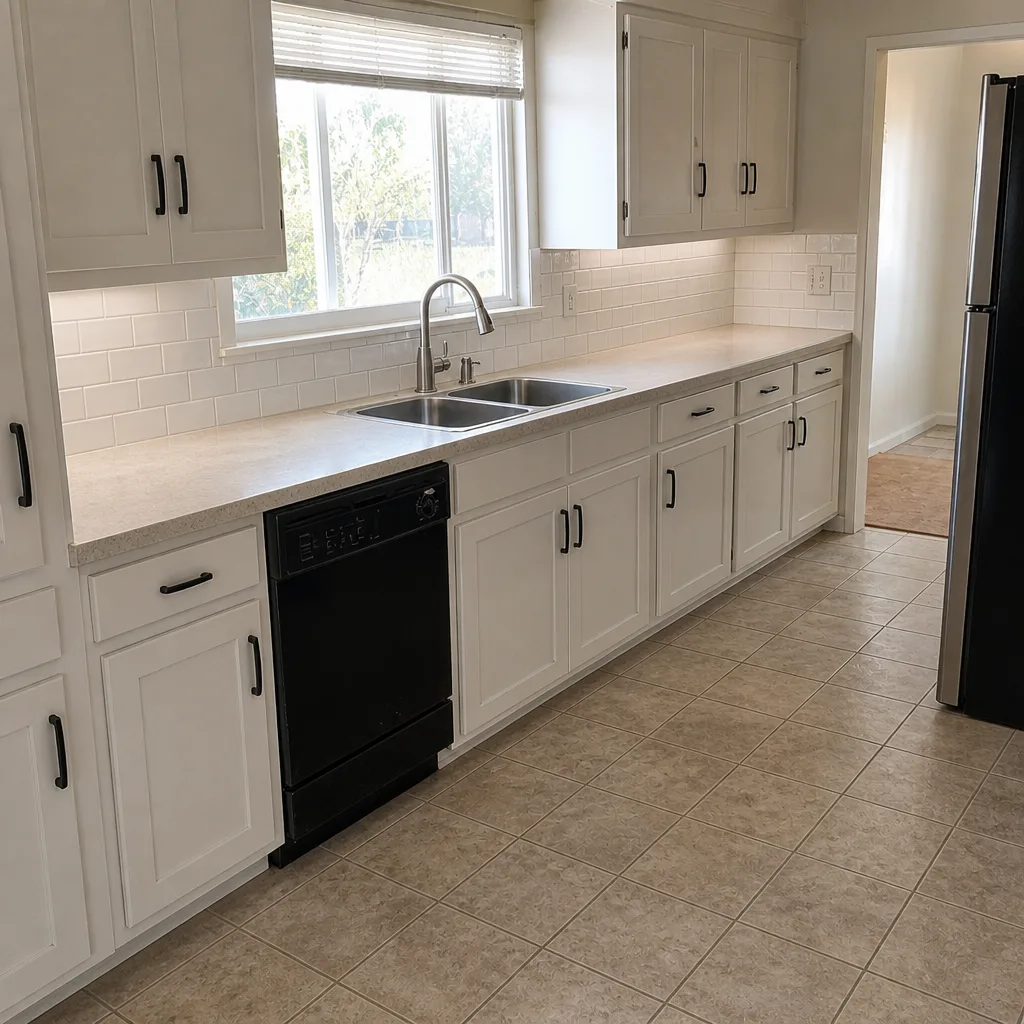 After
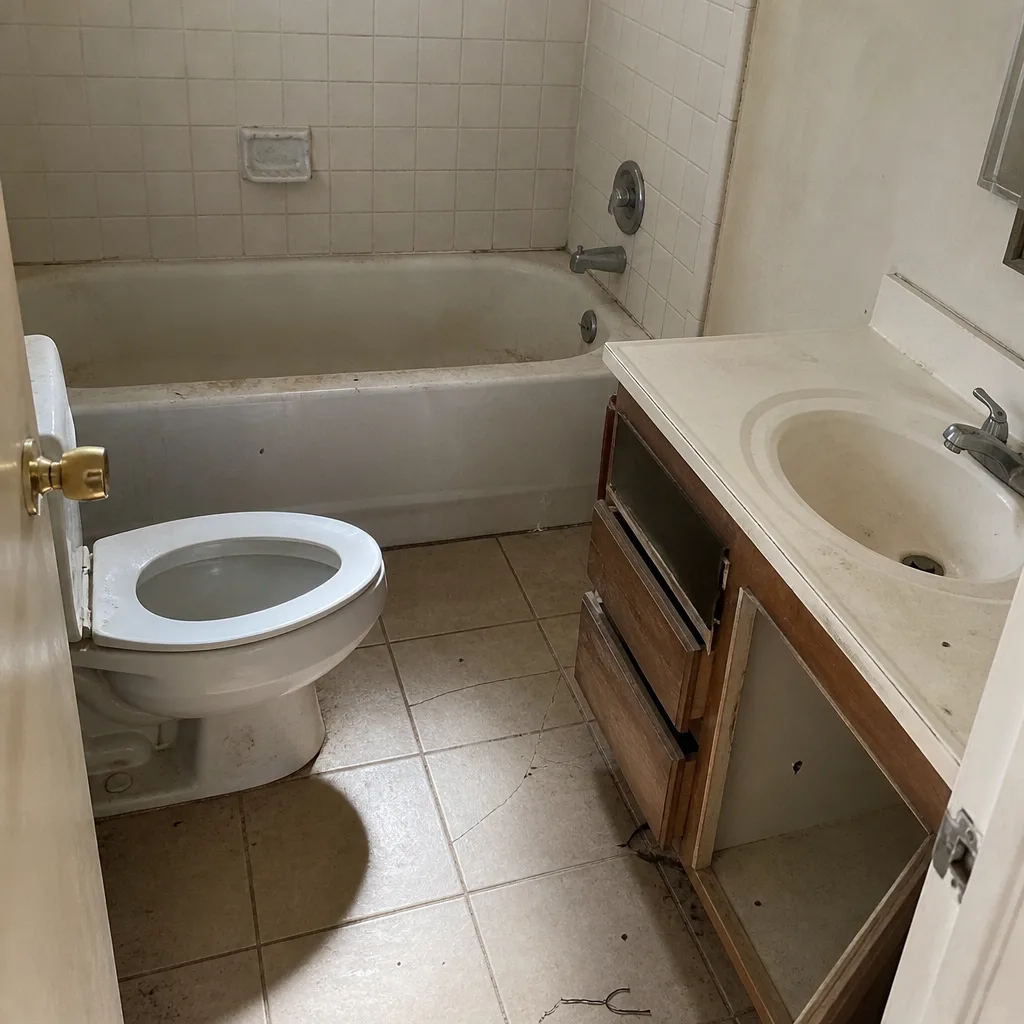 Before
 After
 Before
 After
When to Call a Professional
Most warning signs on this list are maintenance items you can track on your own. The calls that shouldn’t wait are the ones where something is actively moving, actively wet, or actively separating. Call a professional when a crack is offset vertically, when a horizontal crack appears near the base of a retaining wall or masonry wall, when efflorescence returns to the same wall every season, when a roof leak is showing up on the interior, when a foundation crack is progressing across seasons, or when any window or door frame is soft or stained. Those are the signs that pay for a proper look now rather than a repair later.
Boulder City Construction offers free estimates in Boulder City – call (888) 329-9854. We answer 24/7. Fast dispatch from 7am to 7pm, Sunday through Friday. Our technicians have up to 13 years of experience in the trades this guide covers, from foundation and envelope work to driveways, pavers, and fence installation.
Frequently Asked Questions
No. A diagonal crack at a window or door corner in a Boulder City home is most often caused by differential movement of a caliche subgrade layer under the slab, not by a framing defect, and in many cases it’s a tracking item rather than a repair item. What makes it structural is progression: a crack that widens across seasons, or one that appears alongside other movement signs like sticking doors, tilted slabs, or recurring drywall cracking. Measure it and recheck in 60 to 90 days. If it’s actively moving, call (888) 329-9854 for a free estimate.
A normal expansion gap opens and closes with seasonal temperature change and returns to the same width each year, while a failing joint keeps widening or shows sealant that has pulled clean away from one substrate. In desert conditions the sun-facing walls age faster than shaded ones because of UV exposure, so a joint on the south or west elevation failing first isn’t unusual. The sign that matters is a gap that keeps progressing rather than cycling. Call (888) 329-9854 for a free assessment if you’re unsure.
Recurring efflorescence means there’s a persistent moisture source behind the material carrying salts to the surface, not just a cosmetic bloom. On a fence wall it often points to water pooling at the base. Under a paver field it usually means the base profile is holding moisture. Sealing over it makes the problem worse. The right fix is finding the water path and correcting the drainage. Call (888) 329-9854 for a free estimate and we’ll walk the property with you.
Structural repairs and any work that touches the foundation generally require a permit in most jurisdictions, and paver or flatwork replacement sometimes does depending on scope. Ask your city’s building department before work starts. What we do is confirm at the estimate stage which permits the scope requires, pull them under our name, and make sure the work gets inspected before it’s covered up. Call (888) 329-9854 to set up a free estimate.
After the season, inspect the roof edge, gutters, downspouts, grade, hardscape, fence line, and every window and door perimeter on the exterior. Look specifically for lifted shingles, settled or heaved pavers, sand loss from joints, loose fence posts, new sealant failures around frames, and any interior water staining. Then re-photograph every crack you were already tracking. A sign that wasn’t there before the season is the one to act on. Call (888) 329-9854 if you find something that’s progressed.
No. We set the price per job on the written estimate, and a written line-item quote is what governs the final price. If a sign turns out to indicate a larger scope than the initial inspection showed, we stop, explain the change, and re-estimate in writing before any additional work begins. No change orders happen without your approval. Call (888) 329-9854 to schedule a free estimate.
The Bottom Line
Warning signs on a Boulder City home read differently than they would in a wetter climate, and that’s the whole point of this guide. A diagonal stucco crack is usually a subgrade signal here, not a framing signal. Efflorescence is a moisture-path indicator, not a cosmetic one. Seasonal gaps are physics; a gap that keeps widening is failure. The habits that pay off are simple: measure and photograph what you see, track it across seasons, and call a professional when the sign is progressing, wet, or separating. Everything else is a maintenance item you can stay on top of. When it’s time, Boulder City Construction offers free estimates in Boulder City – call (888) 329-9854. We answer 24/7. Fast dispatch from 7am to 7pm, Sunday through Friday.
Written by the team at Boulder City Construction.