Last updated November 18, 2026



Free written scope consultation - allowances, timeline, and change-order rules on paper before a single trade is scheduled
Seasonal Construction Care for Boulder City: Year-Round Homeowner’s Guide
Most Boulder City homeowners brace for August. They watch the forecast, water the foundation, and wait for the heat to break. But the damage that actually accumulates on homes here doesn’t peak in summer. It builds during the shoulder seasons, when the monsoon window dumps weeks of moisture onto materials that baked dry for months, and when winter nights swing thirty-plus degrees between sunset and sunrise. Summer is uncomfortable. The transitions are what cost you. This guide walks through each season’s real risks in Boulder City, in the order they hit, so you can triage what matters and skip what doesn’t.
Quick Answer
Seasonal home care in Boulder City matters most in two windows: the July – September monsoon, when sudden moisture finds every failed caulk joint and roof penetration, and December – February, when clear-sky radiative cooling drives overnight temperature swings that stress sealants, stucco, and hardscape joints. Peak summer heat is uncomfortable but rarely structural. The shoulder seasons are where deferred maintenance turns into repair bills. Triage by consequence, not by calendar.
Styles & brands we work with
- Kitchen remodeling
- Bathroom remodeling
- Home additions & ADU
- Roofing
- Windows & doors
- Driveway & pavers
- Fence
Table of Contents
- Why the shoulder seasons matter more than peak summer
- Pre-monsoon checklist: drainage, caulk, and roof penetrations
- Post-monsoon hardscape inspection protocol
- Winter thermal cycling and what it does to exterior materials
- Spring preparation: catching winter’s silent UV damage
- How to triage maintenance by consequence severity
- What newer Boulder City homes get wrong
- Building a year-round schedule that actually works
Why the Shoulder Seasons Matter More Than Peak Summer
Boulder City sits at roughly 2,500 feet in the Mojave, which means two things most homeowners underestimate. First, summer heat is dry and relentless, but dry heat doesn’t destroy building materials the way moisture does. Second, the desert cools dramatically at night, even in summer, and the diurnal temperature swing widens considerably in winter under clear skies.
That swing is the engine of what we call thermal cycling. Materials expand during the day and contract at night. Sealants stretch and compress. Stucco hairline-cracks. Paver joints flex. Over a single winter, a Boulder City home can cycle through more expansion and contraction than a coastal home sees in several years. The cumulative effect is what shows up as caulk failures in spring, efflorescence on retaining walls, and settlement under driveways.
Then there’s the monsoon. Between July and September, the desert Southwest gets a concentrated chunk of its annual moisture in short, intense bursts. After ten months of dry, materials have shrunk and pulled away from each other. The first real storm finds every one of those gaps. That’s why homes that “held up fine for years” suddenly show water intrusion the week after the first big monsoon push. Nothing changed in the house. The moisture finally found the openings that had been quietly forming.
The practical takeaway is that the most important inspections happen in anticipation of the monsoon and in the aftermath of it. If you’re planning any exterior work, from driveway & pavers to roofing to new window assemblies, timing it around these windows matters as much as the materials you choose.
Pre-Monsoon Checklist: Drainage, Caulk, and Roof Penetrations
Before the first monsoon push in July, you want to close the openings and route the water. Everything on this list is about making sure that when rain finally arrives, it leaves the same way it came. This is a walk-through you can mostly do yourself, with a few items that are worth handing to a professional.
- Walk the perimeter and look down, not up. Check that the ground slopes away from the foundation on every side. Mulch beds that have mounded against the stucco should be pulled back and re-graded. A foundation that stays damp after a storm is a foundation looking for trouble.
- Check every caulk joint at eye level and above. Window perimeters, door thresholds, utility penetrations, hose bibs, and any joint where stucco meets a different material. Look for gaps, cracking, or caulk that’s pulled away from one side. Desert sun degrades caulk silently, and by the time it looks wrong, it’s usually already failed.
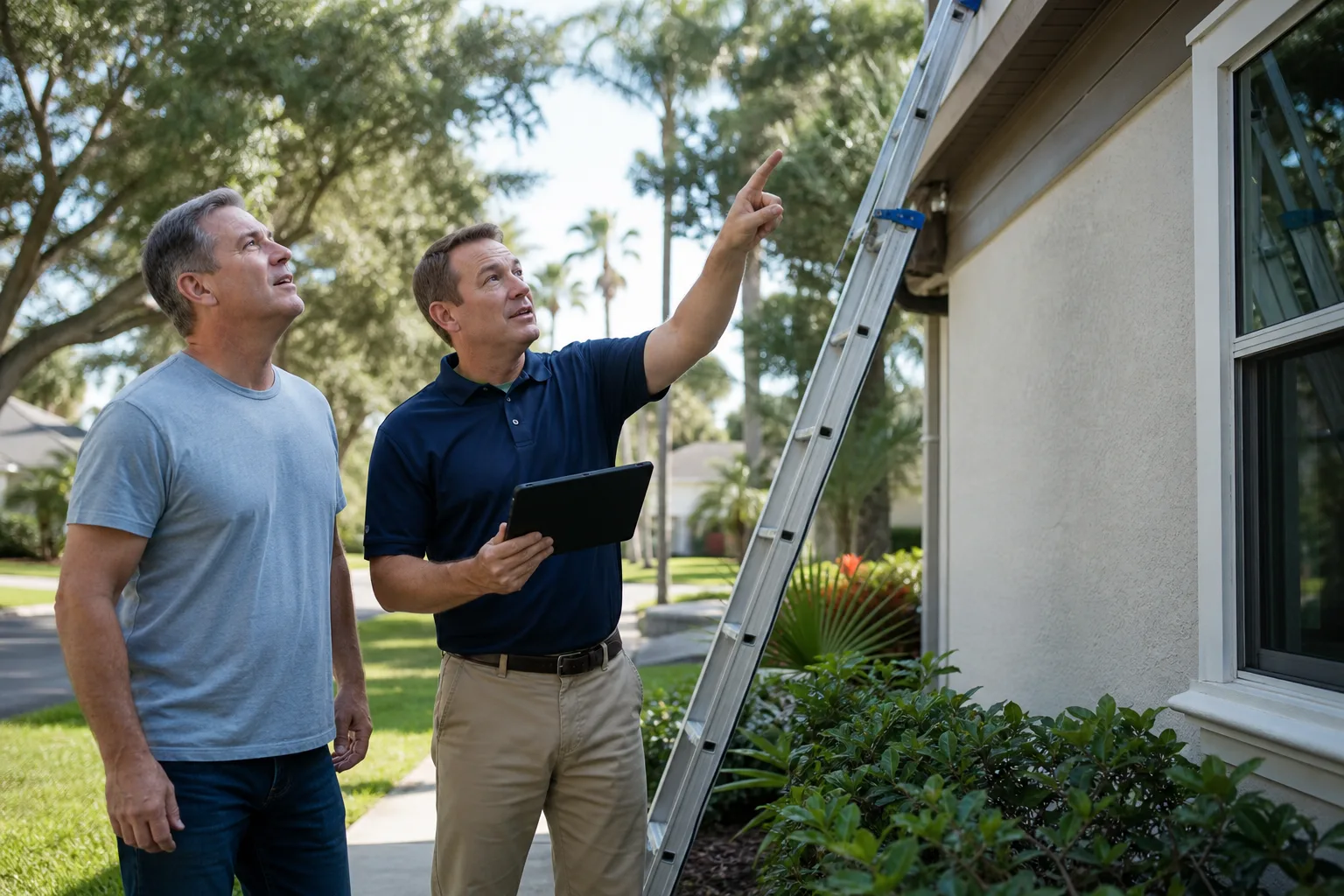
- Inspect the roof penetrations. Vents, skylights, chimney flashings, and any pipe boots. These are where monsoon water gets in first. If any boot is cracked or the flashing sealant looks rough, address it before July. Roof work is dangerous and we’d rather you didn’t try it yourself; this is a check-and-call item, not a DIY repair.
- Clear the drainage path. Gutters, downspouts, and any surface swales. In Boulder City a single clogged downspout outlet can dump water against a foundation wall for a whole storm season.
- Look at your window and door assemblies from inside during the first hard rain. Water staining on interior trim, soft drywall around windows, or a musty smell after a storm are all signs the exterior seal has failed. Replacement or repair of window units is often more effective than re-caulking a unit that’s already letting water past the frame.
Most of this round of maintenance is inexpensive. The point isn’t to spend money; it’s to notice things before moisture finds them. A tube of exterior caulk applied in June is worth dramatically more than a drywall repair in September.
Post-Monsoon Hardscape Inspection Protocol
After the monsoon window closes, hardscape gets the walk-through. This is where most homeowners miss the failures worth catching, because hardscape damage is often invisible from a standing height. Get down on your knees or walk with your eyes on the joints. Here’s the protocol we use:
- Joint sand washout. Paver joints are filled with sand that stabilizes the surface and blocks water from infiltrating under each unit. After a monsoon season, joints can be significantly washed out. Walk the surface and check for deep, empty joints, especially at the low side of slopes and along the edges.
- Paver settlement. Look for any area where the pavers sit visibly lower than their neighbors, or where you can feel a dip underfoot. A single settling paver is usually cosmetic. A cluster of settling pavers means the base under them has been compromised, and that needs to be addressed before it spreads.
- Retaining wall weep hole function. Every retaining wall should have weep holes designed to let moisture drain out of the soil behind it. If you see water pooling behind a wall with no drainage, or you see weeping holes with efflorescence (the white powdery mineral staining) and no active drainage, the wall is holding water it shouldn’t be holding.
- Edge restraint integrity. The edge restraint holds the whole paver field together. If the edge has separated from the field or lifted, the field is moving and needs repair.
- Efflorescence. White staining on concrete or pavers is a moisture indicator. A little is normal after a wet season. Persistent efflorescence that reappears after cleaning tells you water is getting into the base from somewhere it shouldn’t.
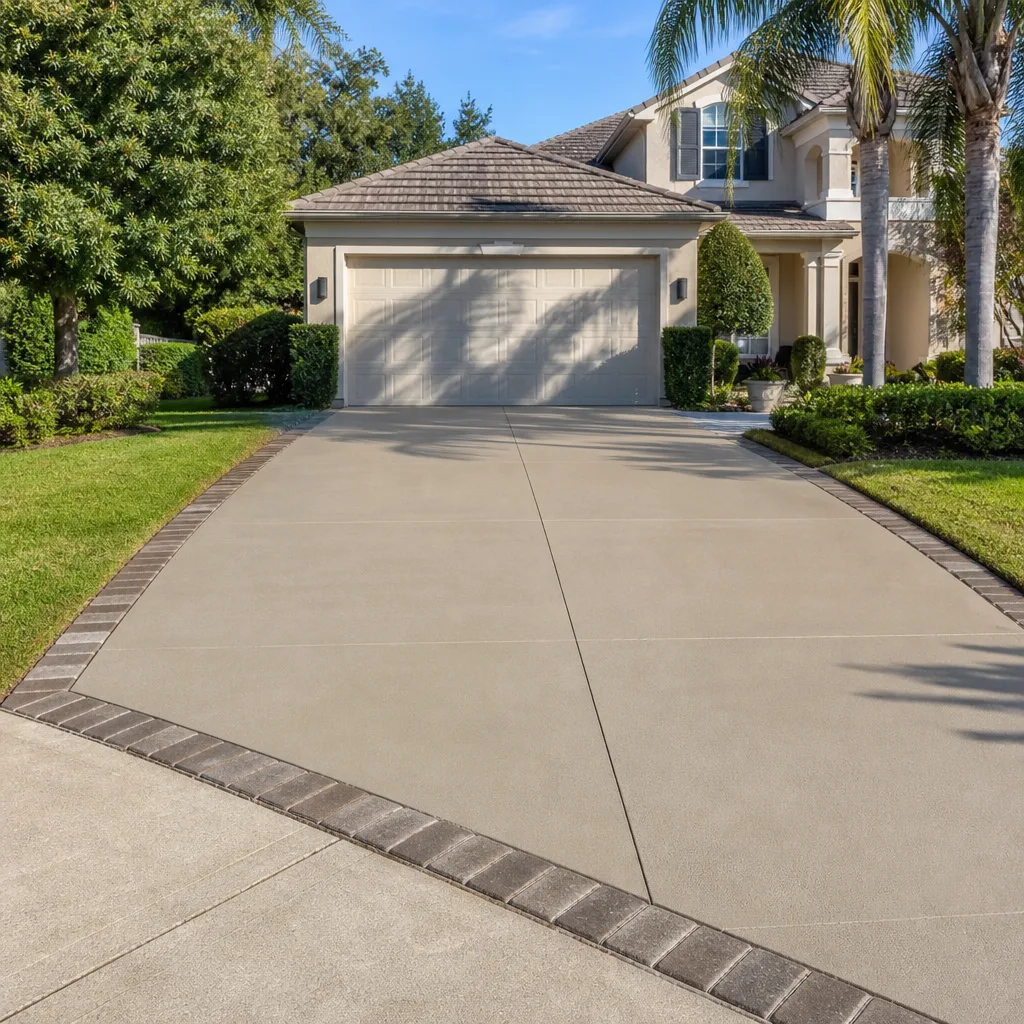
This is also where the quality of the original installation becomes visible. Homes built with commodity concrete often show cracking and settlement because there was no real base prep. Homes built with designer paver systems graded and installed to spec tend to weather the monsoon better because the base does the work. When we’re building a new driveway or patio, we use brands like Belgard, Techo-Bloc, and Cambridge Pavers specifically because they install to a spec that holds up through these cycles. You can see examples on our driveway & pavers page.
Winter Thermal Cycling and What It Does to Exterior Materials
Winter in Boulder City isn’t cold by most desert standards, but the clear skies and elevation drive sharp overnight temperature drops. During the day, the sun heats exterior surfaces well above ambient temperature. At night, especially under clear skies, surfaces radiate heat away and cool fast. That swing is what does the damage.
Here’s how it plays out on different materials:
- Stucco: Stucco is a hard system, but it’s not immune to movement. Repeated heating and cooling creates fine hairline cracks, most visible in the sun-facing walls and the corners. Those cracks are entry points for monsoon water when summer arrives.
- Caulk and sealants: This is the first material to fail. Exterior caulk stretches and compresses with each cycle, and even good caulk eventually reaches its limit. The joints worth watching are the high-exposure ones: south and west facing windows, door thresholds, and any joint at a different material transition.
- Hardscape: Pavers expand and contract slightly with each thermal cycle. Joint sand shifts. Failure at the edges usually shows up in winter, before the rain even arrives.
- Doors and windows: Wood and vinyl frames can shift slightly as the seasons change. If a door starts sticking or a window seal feels loose, it’s often thermal movement at the frame, not a problem with the unit itself.
- Roofing: Asphalt shingles and their fasteners move slightly with temperature. The failures show up at the penetrations, usually after a winter season of flexing. This is why a spring roof inspection is worth the call before summer monsoon.
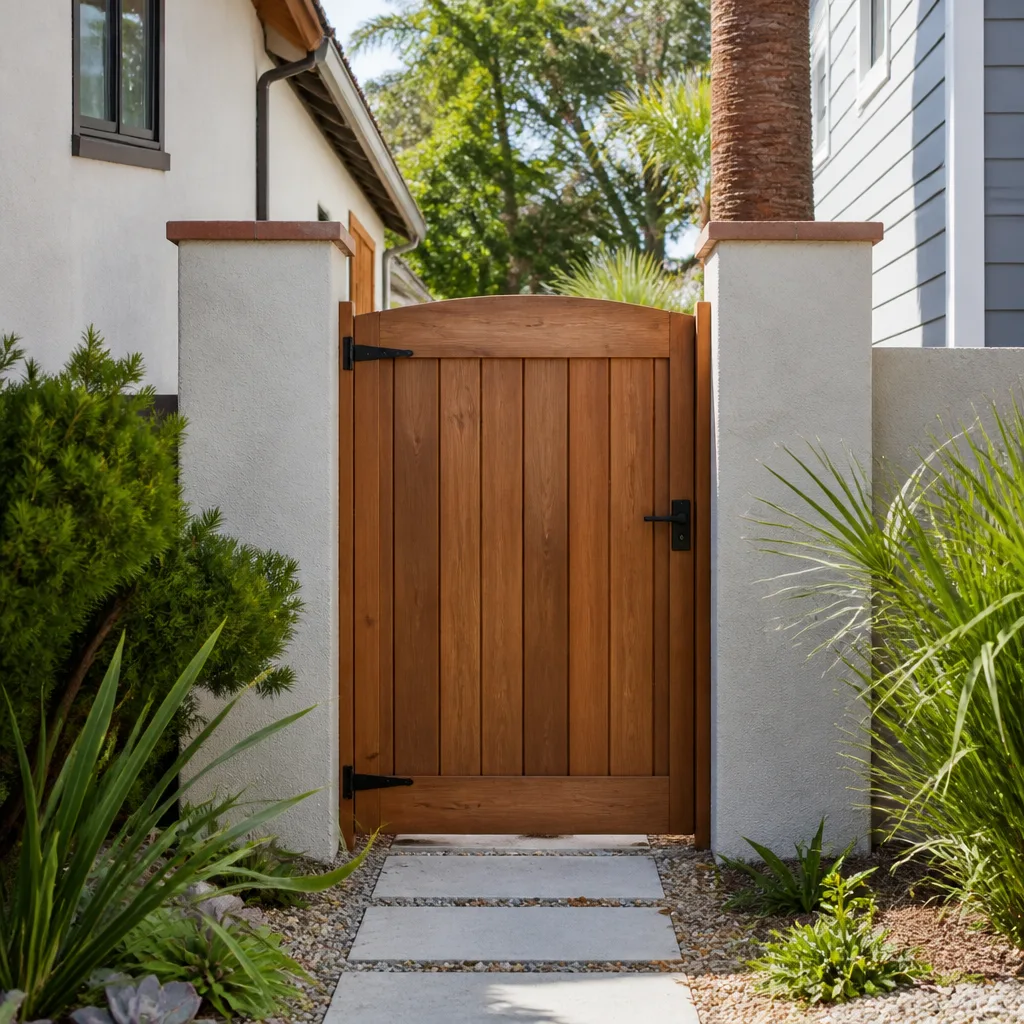
The good news: winter is the ideal season to inspect and repair, because the failures are in their most visible state. It’s also the right time for major exterior projects. If you’re replacing windows, fence installation is often scheduled in the same window, because both trades involve the same part of the property and one schedule saves everyone time.
Spring Preparation: Catching Winter’s Silent UV Damage
Boulder City gets a lot of sun. That’s not news to anyone who lives here, but the cumulative effect of UV on exterior materials is the thing most homeowners underestimate, because UV damage is invisible until it fails all at once. Spring is the time to look at it before summer heat piles on.
The materials to inspect in spring:
- Stucco and painted surfaces. Look for chalky, faded areas on the sun-facing walls. When paint has gone chalky, it’s lost its protective layer, and the stucco underneath will start weathering fast.
- Caulk joints (again). Yes, caulk comes up every season, because it’s the one material on your exterior that lives in the most exposed place. Spring is the second-best time to re-seal, right after pre-monsoon.
- Window and door seals. The weatherstripping on doors and the perimeter seal on windows degrades under UV. If you feel air leaks that weren’t there last fall, that’s the UV hitting, not your imagination.
- Paver surface. The color of a paver surface tells you a lot. If it’s noticeably faded from the original shade, that’s UV at work, not just dirt.
- Roofing. Shingle granules protect the asphalt underneath from UV. A spring roof inspection will tell you if granule loss has advanced to the point where the shingles are losing their protective layer. This is a call-a-professional item; the materials we work with include GAF, CertainTeed, Owens Corning, IKO, and Atlas, and knowing how each behaves in this climate makes the inspection more useful.
Spring is also the right time to start planning summer interior work. If you’re going to be indoors during monsoon season anyway, remodels or additions can happen while the outside is at its most disruptive. That’s the kind of sequencing where a single-source contractor pays off. You can read more about that on our home additions & ADU page.
How to Triage Maintenance by Consequence Severity
The single most useful skill for a homeowner in Boulder City is honest triage. Not every deferred item is urgent. Some are cosmetic, some are structural. Here’s the triage framework we use.
Tier 1: Structural consequence if deferred
- Failed roof penetrations. Small leak becomes drywall and framing damage becomes mold and rot. Address before monsoon, every year.
- Drainage against the foundation. Persistent moisture weakens foundation soils and can lead to real structural movement.
- Retaining wall weeping problems. A retaining wall that can’t drain is retaining far more pressure than it was designed for.
- Failed window or door perimeter seals. Water in the wall cavity is the classic hidden structural damage.
- Caulk gaps at the high-exposure joints. Small problem, big consequence if it’s a monsoon year.
Tier 2: Expand in cost if deferred
- Paver joint sand washout. Cheap to fix on its own. Expensive if it lets the base soften.
- Settlement clusters. Small now, whole-field rebuild later.
- UV chalkiness on paint. Fixable with a recoat now, more expensive once it’s a stucco repair.
- Roof granule loss. Accelerates once it starts.
Tier 3: Cosmetic only
- Faded paver color. Ugly, not structural.
- Hairline stucco cracks without water intrusion. Worth sealing when you’re already working nearby.
- Minor efflorescence on dry surfaces. Clean and evaluate.
If you’re reading this in the middle of a season and feeling behind, don’t try to do everything at once. Do the top three items from Tier 1 first. Rest when you’re caught up. Repeat next season.
What Newer Boulder City Homes Get Wrong
Newer homes in Boulder City have one advantage: materials are fresh, caulk is young, and the roof is intact. They have one disadvantage: builders don’t always grade the exterior for the realities of this climate. We see three recurring issues.
The first is drainage designed for a different climate. A home that was graded with a standard fall to a surface that handles average rainfall can be under-built for the way monsoon rain actually arrives. When water dumps fast, the same grade needs to move a lot more water in a short time. So one of the first things a new homeowner should check is where water actually goes when it flows off the roof and across the yard during the first real storm.
The second is caulk quality. Builder-grade caulk on a production home is often a fine material for a mild climate, but not for Boulder City exposure. Re-caulking the high-exposure joints with an exterior-grade product in the first two or three years is a small project with real payoff.
The third is hardscape spec. Many new homes come with a paver or concrete driveway that looks fine at handover but wasn’t built with a base and edge restraint to match what this climate will ask of it. If your driveway is a few years old and showing any movement at the edges, that’s a spec issue showing up, not just normal wear. Brands like Unilock and Tremron offer systems designed exactly for this kind of long-term exposure. You can read more about how we handle that on our driveway & pavers page.
Building a Year-Round Schedule That Actually Works
A maintenance schedule is only useful if it survives the season. Here’s one that does, based on how Boulder City weather actually cycles.
- March – April: Spring exterior inspection. Check stucco, caulk, paint, roof, and window seals. Address UV damage from the winter before summer heat arrives.
- May – June: Pre-monsoon prep. The full pre-monsoon checklist: drainage, caulk, roof penetrations, window and door seals. This is the highest-value month on the calendar.
- July – September: Monsoon watch. After every significant rain event, look at interior window trim and the base of exterior walls. Address water intrusion fast.
- October – November: Post-monsoon hardscape inspection. Joint sand, settlement, retaining wall weeping holes, edge restraint. Catch the failures before winter locks them in.
- December – February: Winter interior work. This is the ideal season for interior renovations, additions, and kitchen or bath remodels, because the weather outside doesn’t interfere with interior crews.
That’s five checkpoints a year, most of which are a walk-around you can do with your own eyes and a flashlight. The prep work is worth every minute. Every season you catch a small failure is a season you’re not paying for the structural version of the same problem.
What About Roofs and Windows in the Monsoon Window?
Roof and window work can happen in the monsoon window, but we schedule it around the storm pattern rather than through it. If you need a roofing repair or a window assembly replacement urgently, we look at the forecast before scheduling. If you’re planning a replacement rather than a repair, waiting for the post-monsoon window in October is usually a better call. The weather is stable, the materials are more predictable, and inspection after the season gives you a clearer picture of what needs to happen. If any of that involves structural repairs behind a wall or at an addition, that work gets planned with more lead time. Reach out to the team at Boulder City Construction and we’ll help you sequence it.
Common Mistakes to Avoid
- Skipping exterior inspections in winter. Winter feels inactive because nothing is growing and nothing is blooming. In practice it’s the season when caulk and stucco failures are most visible, so winter is the right time to inspect, not skip.
- Treating monsoon damage as a one-time event. A wet spot inside after a storm is often the last symptom of a slow failure that’s been building for seasons. If you see it, look upstream at the roof and the window perimeter, not just at the wet spot itself.
- Replacing pavers before checking the base. New surface over a failed base fails twice as fast. Fix the grading and edge restraint before re-laying the surface.
- Re-caulking over failed caulk. Caulk bonds poorly to old caulk. The old product needs to come out before the new goes in, or the new one fails on the same schedule.
- Waiting for a visible leak before touching the roof. Monsoon leaks start at penetrations, and by the time they’re visible inside, you’re usually looking at interior repair too.
- Letting UV damage accumulate through spring. Faded paint and chalky stucco are early signs, not cosmetic problems. Address them before summer UV adds to them.
- Splitting the work across unrelated contractors. When a leak traces back to a window assembly and the window is set into a wall that needs stucco repair and a new roof penetration, splitting that across three contractors means three schedules and three warranty conversations. One contractor, one scope.
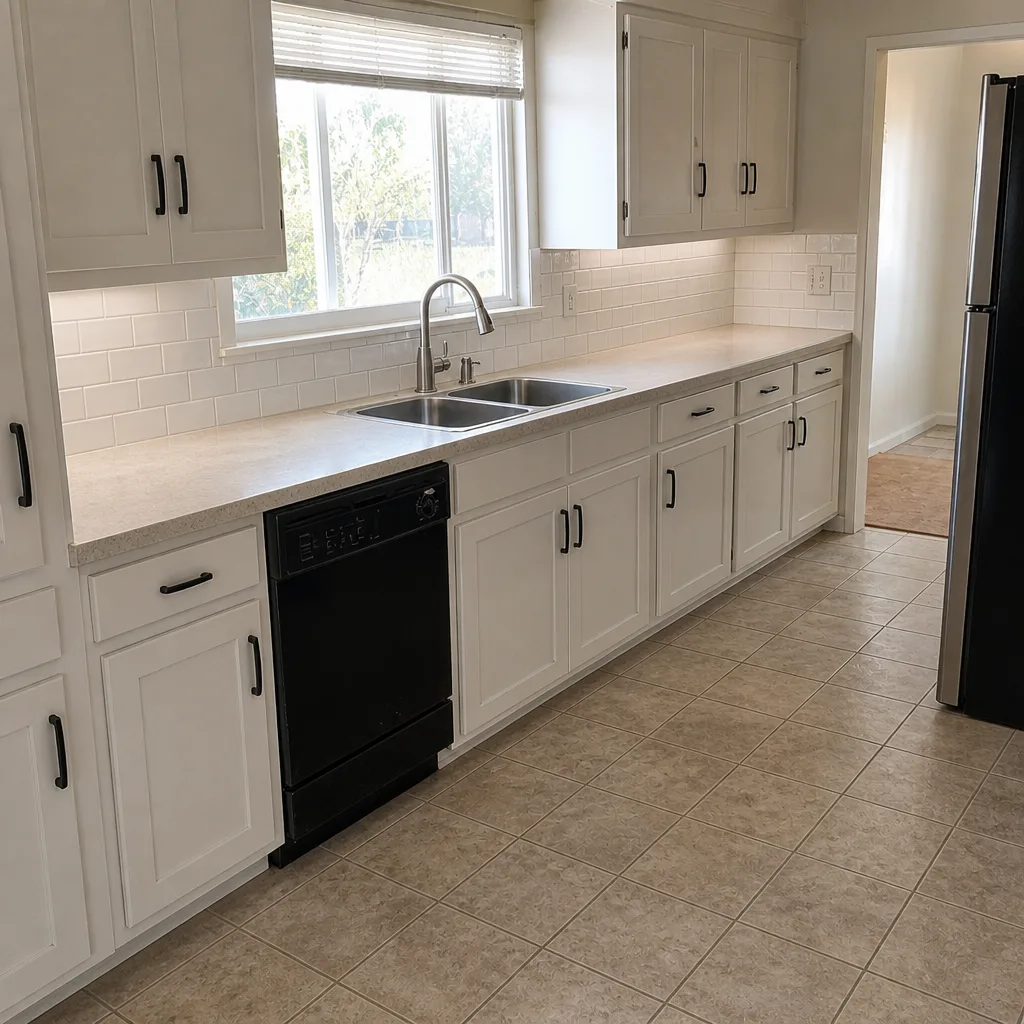
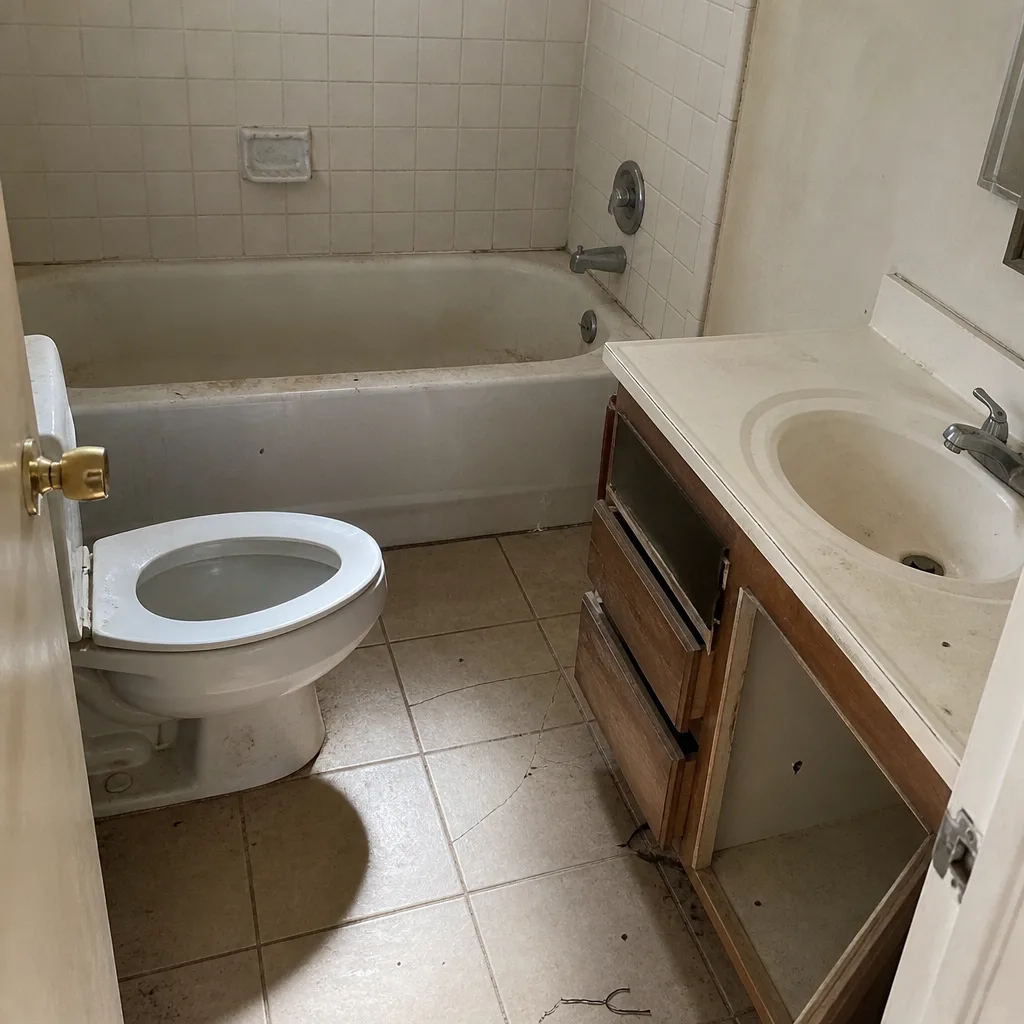
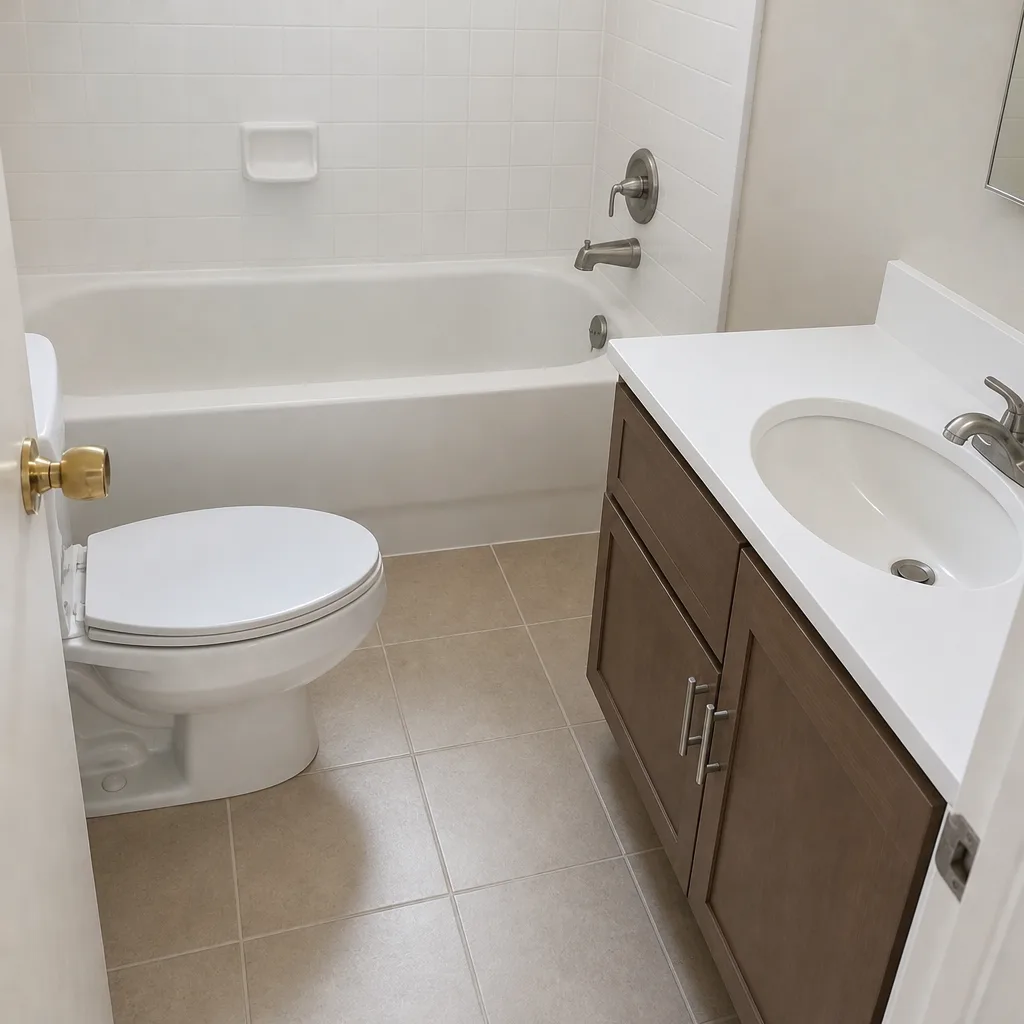
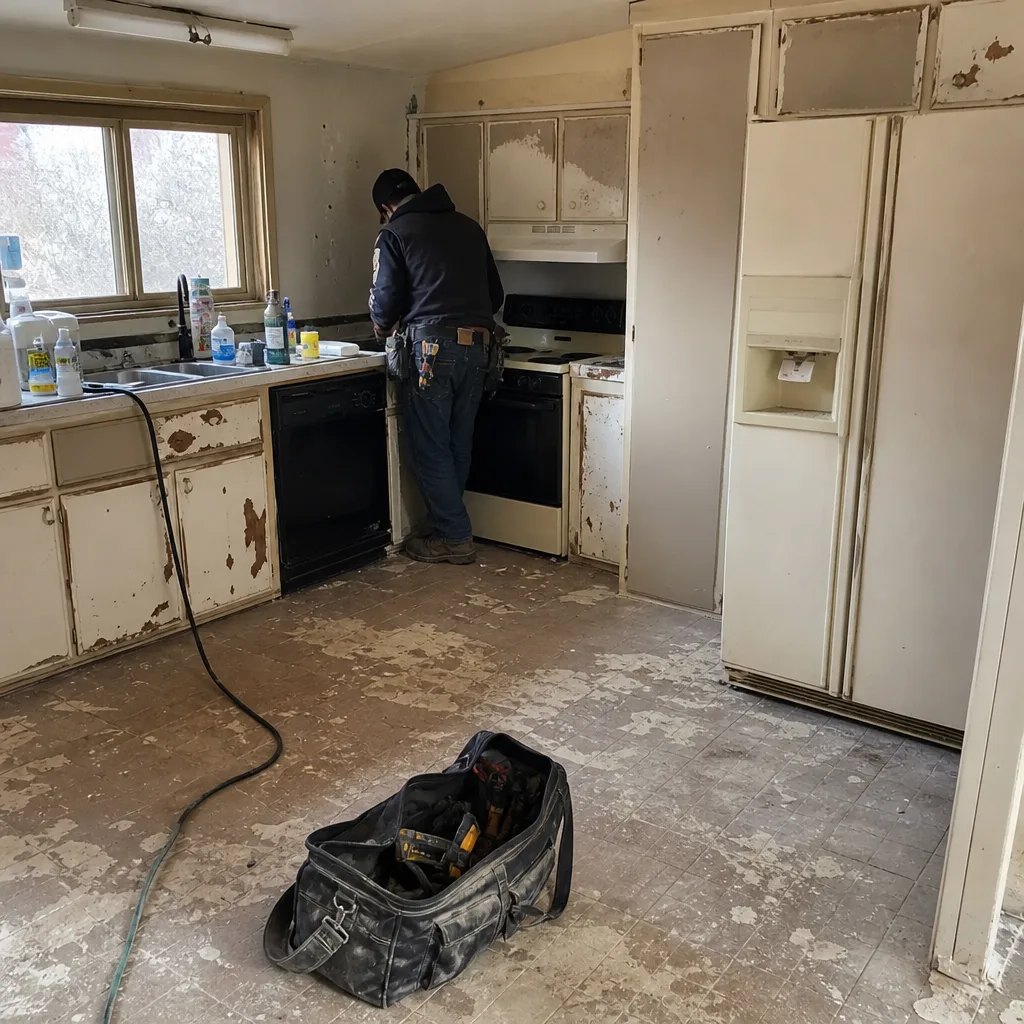
See the difference
 Before
 After
 Before
 After
 Before
 After
When to Call a Professional
Most of the inspections in this guide are things a careful homeowner can do with a flashlight and a notepad. But some situations belong with a professional. Call us when the issue involves the roof (penetrations, granule loss, flashing), the wall cavity (staining, soft drywall, musty smell after a storm), window or door replacement, retaining wall drainage, or any structural question about paver settlement that goes beyond a single paver. Also call when you’re ready to do a complete replacement rather than a repair, whether it’s a new fence, a roof, a window assembly, or a full exterior re-do.
Boulder City Construction offers free estimates in Boulder City. Call (888) 329-9854. We answer 24/7. Fast dispatch from 7am to 7pm, Sunday through Friday. Our technicians have up to 13 years of experience and we work from a roster of 50+ manufacturer brands across roofing, windows and doors, cabinetry, countertops, fixtures, pavers, fencing, and prefab ADU systems, so you get a real material choice rather than whatever the supplier sends.
Frequently Asked Questions
The pre-monsoon checklist in late May or June is the highest-value inspection of the year. That’s when roof penetrations, caulk joints, and drainage issues get addressed before the actual moisture arrives. Call (888) 329-9854 for a free estimate if any item on that checklist needs repair.
Once, in October or early November, is enough for most homes. Walk the full surface looking for joint sand washout, settlement clusters, edge restraint problems, and weeping holes on retaining walls. If you see water pooling anywhere except where it’s supposed to, that’s the item to schedule first.
Not cold itself as much as the temperature swing. Clear skies and elevation drive sharp overnight drops that cycle sealants and stucco through daily expand-and-contract. The visible result is failing caulk joints and hairline cracks in spring. Address those before summer, not after.
If penetrations and flashing failures are the issue, repair is usually the right call. If the shingles have advanced granule loss or multiple field failures, replacement is likely the better investment. Get an inspection before committing, and schedule the actual replacement for the post-monsoon window if the roof isn’t actively leaking.
Settlement is inevitable if the base and edge restraint were installed poorly. It’s mostly avoidable if they were installed right. If your pavers were done with a proper grade, a compacted base, and a real edge restraint, they can go years without meaningful settlement. If they’re already moving at the edges, the base needs to be evaluated, not just patched. Call (888) 329-9854 to schedule a free estimate.
Yes, and winter is actually a smart window for it. The weather outside stays dry, and interior crews aren’t competing with monsoon delays. If your project includes an exterior scope (say, a roof, window replacement, or hardscape), sequence that around the shoulder seasons instead of through them.
The Bottom Line
Boulder City’s peak summer heat is uncomfortable, but it’s not the season that costs homeowners money. The two windows to watch are the July – September monsoon and the December – February clear-sky cooling cycle. Everything else is a supporting act. Catch the failures during those windows and you’ll spend a lot less, and spend it on the project you actually wanted rather than the repair you didn’t. Build a five-checkpoint yearly schedule, triage by consequence severity rather than by what looks worst, and call a professional when the work involves the roof, the wall cavity, or structural settlement. Boulder City Construction offers free estimates for every kind of work on that list. Call (888) 329-9854. We answer 24/7. Fast dispatch from 7am to 7pm, Sunday through Friday, closed Saturday.
Written by the team at Boulder City Construction.