Last updated November 18, 2026








Free written scope consultation - allowances, timeline, and change-order rules on paper before a single trade is scheduled
How to Hire a Construction Contractor in Boulder City: A Step-by-Step Guide
Three bids only help you if all three contractors are pricing the same job. In Boulder City, where a single project routinely pulls roofing, electrical, plumbing, and structural permits, they almost never are. The bids look comparable on one page and diverge wildly on the next, and the homeowner ends up comparing a number to a number that means something different. That gap, not dishonesty, is where most contractor disputes begin: one bid includes the permit fees and inspections, another leaves them as a homeowner line item, a third buries them in an allowance. This guide walks through scope verification first, bid comparison second, and shows you the Boulder City-specific details that make the difference.
Quick Answer
To hire a construction contractor in Boulder City, verify the contractor’s Nevada State Contractors Board license and its classification first, then write a detailed scope document before you request a single bid. Compare bids only after confirming each one prices identical line items, permit responsibilities, and material specifications. The written contract should lock in change-order thresholds, inspection hold points, and material substitution rules before any work begins.
Styles & brands we work with
- Kitchen remodeling
- Bathroom remodeling
- Home additions & ADU
- Roofing
- Windows & doors
- Driveway & pavers
- Fence
Table of Contents
- Why Scope Comes Before Price
- How to Write a Scope Document Before You Call Anyone
- Verifying a Nevada Contractor License the Right Way
- Reading a Boulder City Bid: Red Flags That Matter
- Using Manufacturer Brand Relationships as a Quality Signal
- Contract Clauses That Matter in a Desert Climate Build
- When One Project Needs Several Trades: The Single-Source Question
- The Pre-Signing Walkthrough
Why Scope Comes Before Price
The standard advice to collect three bids assumes the bidders are pricing the same work. On a simple job, like replacing a water heater or patching a fence line, that assumption usually holds. On a complex project in Boulder City, it falls apart fast. A kitchen remodel that involves moving a gas line, adding a circuit, and cutting into a load-bearing wall is really three projects wearing one coat of paint. Three contractors can price that job three completely different ways and all be honest.
The reason is that contractors price what they see in the walkthrough, and what they see depends on what they assume. One assumes the existing subfloor is sound. Another assumes it needs replacement. One includes the permit and inspection fees in the total. Another lists permits as a separate line the homeowner pulls. One specs a mid-grade cabinet line. Another prices builder-grade. You get three totals that tell you nothing about relative value.
This is why scope alignment is the highest-leverage step in the hiring process, and why it comes before you ever pick up the phone. When you hand every contractor the same written scope, three things happen:
- Bids become comparable line by line, so you can see where the real differences are.
- Contractors who don’t want to be pinned to specifics self-select out, which saves you time.
- The winning bid becomes a working document you can hold the contractor to at every phase.
In our experience across Boulder City projects, the homeowners who get the cleanest outcomes are the ones who spent an evening writing down what they actually wanted before calling anyone. It feels like a delay. It isn’t. It’s the step that prevents the expensive conversations later.
How to Write a Scope Document Before You Call Anyone
A scope document is a plain-language description of the work you want done, broken into line items specific enough that two contractors reading it would price the same thing. You don’t need construction vocabulary. You need to be specific about surfaces, quantities, and what’s included versus excluded. Here’s how to build one in a single sitting:
- List the rooms or areas and what happens to each. “Kitchen: replace all upper and lower cabinets, new countertop, new sink and faucet, new backsplash, keep appliance layout.” Vague phrases like “update the kitchen” give a contractor room to interpret, and interpretations cost you money.
- Note what you’re keeping. Existing appliances, a specific fixture, the floor if it’s staying. Anything not marked “keep” will likely be assumed replaceable, which inflates the bid and muddies comparison.
- Call out anything that touches systems. Moving a gas line, adding an outlet, relocating a drain. Any line that touches plumbing, electrical, or gas triggers a separate permit and sometimes a separate licensed trade. Write it down. These are the line items that most often go missing from bids.
- Specify the quality tier you’re aiming for. Instead of “good cabinets,” write “semi-custom cabinets at the level of KraftMaid or Wellborn.” Instead of “nice countertop,” write “quartz, mid-tier.” When you name a quality level, contractors can’t quietly substitute builder-grade and call it equivalent.
- State your exclusions. “No appliance purchase,” “no landscaping,” “no painting outside the room.” Exclusions are as important as inclusions, because they stop a contractor from padding the bid with work you never wanted.
- Mark who pulls permits. Write it explicitly: “Contractor to pull all required permits and schedule inspections.” If you leave this blank, it defaults to ambiguity, and ambiguity is where disputes live.
- Set a rough budget band and a timeline. You don’t have to reveal your exact ceiling, but a band tells a contractor whether they should be pricing premium materials or value-grade, and that affects whether the bid is realistic.
Print the scope. Hand the same version to every contractor. If a bid comes back that ignores half your line items, you’ve learned something valuable about how that contractor operates before you’ve signed anything. We’ve seen Boulder City homeowners save weeks of back-and-forth just by insisting every bidder respond to the same document. For projects that span the roofline to the driveway, the Boulder City Construction approach mirrors this: one document, one scope, one point of contact pricing the whole thing so it can actually be compared.
Verifying a Nevada Contractor License the Right Way
Nevada regulates contractors through the Nevada State Contractors Board, and the license itself is classified by the type of work permitted. Verifying that license is not a formality. It’s the single fastest way to eliminate the bottom third of your bid list. The verification takes ten minutes and it’s free.
Nevada contractor licenses fall into two broad families. Class A covers general engineering and requires a licensed engineer as a qualifier; it’s for large infrastructure work and rarely shows up in residential projects. Class B is a general building contractor, which means the contractor can take a project involving more than two unrelated trades. That’s the classification that matters for a full remodel or an addition, because a client with a broad project needs one entity that can legally take responsibility for all the trades. Class C is a specialty contractor, and each subclass covers a single trade, so C-14A is plumbing, C-2 is electrical, and so on. A Class C specialty contractor is licensed for their trade only.
That distinction matters directly to Boulder City homeowners. If you’re hiring for a full kitchen remodel that involves plumbing, electrical, cabinetry, and countertop installation, you want a Class B contractor, or a structure where a licensed specialty contractor is coordinating the trades under contract. If a specialty contractor offers to take on a multi-trade job without one of those arrangements, that’s a problem regardless of how good their price looks.
Here’s how to run the check:
- Ask for the license number and classification in writing before the walkthrough. A reputable contractor provides it without hesitation.
- Look up the license on the Nevada State Contractors Board’s public lookup and confirm three things: the status is active, the classification matches the work in your scope, and the licensee name matches the business name on the bid.
- Check for any disciplinary action on the record. The Board publishes this. A single old complaint doesn’t disqualify anyone, but a pattern does, and you’ll want to ask the contractor about it directly.
- Confirm the license is in the contractor’s own name and not a qualifier who has nothing to do with your job.
- Ask for the certificate of insurance for both general liability and workers’ compensation and confirm the coverage is current. This is separate from the license and equally important; an uninsured contractor on your property is a risk you shouldn’t accept.
In our experience, the contractors who take the license conversation seriously are the same ones who take the scope document seriously. It’s a reliable proxy for how they run the rest of the job.
Reading a Boulder City Bid: Red Flags That Matter
A bid is a written document, not a handshake and a number. The way it’s structured tells you how the contractor thinks, how they manage risk, and how they’ll behave when the unexpected shows up mid-project. In Boulder City, where a project can pull permits from multiple jurisdictions and the summer heat pushes some work into early morning hours, the bid details matter more than the total.
Watch for these specific flags:
- No permit line item. A permit isn’t optional on structural, electrical, plumbing, or gas work. If the bid doesn’t include a line for permits and inspections, either the contractor plans to skip them, which puts you on the hook at resale, or they intend to charge them later. Both are bad outcomes.
- Unlisted subcontractors. A bid that names the trades but doesn’t say who the subs are is a question you need to ask. Who’s doing the electrical? Are they licensed? The general contractor should be able to name them or confirm they’ll use licensed trades for every permitted scope.
- Vague allowance language. An “allowance” is a placeholder dollar amount for a material the contractor hasn’t finalized. A $500 allowance for a sink sounds fine until you learn the model you want retails well above that, and the difference comes out of your pocket. Every allowance should be named (which faucet brand, which countertop material) and sized realistically. When we spec a bathroom, we name the fixture lines, whether that’s Kohler, Moen, or Delta, so the allowance reflects the actual choice rather than a placeholder.
- No material substitution clause. If the bid doesn’t say what happens when the specified material is backordered, ask. Some contractors substitute casually. That’s how you end up with a different roof shingle than the one you approved.
- Missing exclusions. A bid that lists everything included but nothing excluded invites surprises. Read the exclusions carefully.
- Deposit outsized to the stage of work. A large deposit demanded before any material is ordered, with no schedule attached, is a flag. Payments should track milestones: deposit, rough-in, drywall, finish, final walkthrough.
The bid you should be suspicious of is the one that’s dramatically lower than the others. In a well-scoped comparison, bids usually land within a reasonable band of each other. A bid that’s 30% lower usually means something was left out, not that the contractor is somehow more efficient. Ask them to itemize their exclusions against your scope document. The answer tells you everything.
Using Manufacturer Brand Relationships as a Quality Signal
Contractors source materials from somewhere, and where they source from is a reliable signal of what kind of job they run. A contractor with established relationships with recognizable manufacturers gets consistent delivery, predictable pricing, and access to the material you actually specified. A contractor buying from whatever’s on the shelf at the local supply house gives you no consistency, and no lever if the material comes in wrong.
This isn’t about collecting brand names as decorations. It’s about what those relationships do for you. When a contractor is an authorized dealer or installer for a manufacturer, the manufacturer’s own warranty terms apply to your project, and the contractor has a meaningful relationship with the manufacturer’s technical support if something goes wrong. A roofer working with GAF, CertainTeed, or Owens Corning materials can register the warranty in your name. A kitchen contractor who specs KraftMaid or Wellborn cabinets is buying through a supply channel that honors the cabinet warranty if a door warps.
In Boulder City, where the summer heat is hard on exterior materials, that consistency matters more than in milder climates. Roofing materials that perform well in a hot, dry, high-sun environment are different from what performs well in wet climates, and a contractor with established manufacturer relationships is more likely to be spec’ing to the local conditions rather than a generic catalog. If a bid specifies “shingles, standard grade,” ask which manufacturer and which line. A contractor who can’t answer that is buying from an undifferentiated source.
The same principle holds inside the house. A kitchen and bath remodel spec’d with cabinets from KraftMaid or Wellborn and fixtures from Kohler or Moen is spec’d at a level most contractors working with commodity sources can’t reach without additional vendors, and each vendor you add is another point of failure. You choose the surface; we handle everything else, including the sourcing. For more on how that plays out on a whole-house scope, our home additions & ADU page walks through the same sourcing principles on a bigger canvas.
Contract Clauses That Matter in a Desert Climate Build
A construction contract written for a mild coastal climate quietly assumes things that don’t hold in Boulder City. Deserts run intense heat and sun on exterior materials, wide swings between daytime highs and overnight lows, and a dry climate that cracks wood and stresses concrete. These conditions don’t break a project, but they change what the contract needs to cover. Here are the clauses that carry the most weight locally.
Material substitution rights. The contract should state that no material can be substituted for the specified item without your written approval, and that any substitution must be equivalent or better in performance characteristics. In a hot, dry climate where you’ve chosen a specific roof shingle or countertop material for how it handles sun exposure and thermal stress, a casual swap to a different product undermines the whole specification. Make substitution in writing, or don’t allow it.
Change order thresholds. Change orders are the single biggest source of cost overruns. The contract should specify the threshold above which any change must be put in writing and signed before work proceeds, and it should require that a written change order include the price impact and the schedule impact. Anything below the threshold can proceed on the contractor’s discretion; anything above it should freeze the work until you sign.
Inspection hold points. Certain phases of work cannot proceed until a permit inspection clears. Frame, rough-in, and final inspections are typical. The contract should name the hold points explicitly and confirm that work will not move to the next phase until the prior inspection passes. This protects you in the long run, because an inspection that was skipped or rushed is a problem you inherit years later. In Boulder City, the permitting authority handles these inspections, and the contractor needs to schedule them.
Weather and temperature clauses. Concrete for a driveway & pavers project, roof adhesives, and exterior paint all have temperature windows where they cure correctly. The contract should state that work will be scheduled to respect the manufacturer’s temperature and weather requirements. In the Boulder City summer, that often means pouring concrete or laying pavers in the cooler morning hours rather than the middle of the day. It’s a scheduling detail that affects quality for years.
Warranty terms in writing. Workmanship warranty and manufacturer warranty are two different things, and the contract should distinguish them clearly. The workmanship warranty covers installation errors. The manufacturer warranty covers material defects. Both should be named with durations in the contract.
When One Project Needs Several Trades: The Single-Source Question
Most homeowner disputes in Boulder City don’t happen because a contractor did bad work. They happen at the seams between trades. The roofer finishes and the gutter installer says the roof edge isn’t right for their bracket. The plumber roughs in the kitchen sink and the cabinet installer says the cabinet depth is off by an inch. The electrician runs a line and the drywall goes up before the fixture model was final, so the cutout is the wrong size. Each trade is doing reasonable work. The problem is that nobody’s holding the seams.
This is where the single-source contractor question becomes practical rather than theoretical. When one contractor is responsible for roofing, windows, cabinetry, countertops, and fixtures under one contract, the seams become their problem to solve, not yours. There’s one schedule, one set of change orders, one warranty conversation, and no finger-pointing between subs.
Not every project needs that. A fence replacement is one trade. But a whole-house upgrade, an addition, or a coordinated kitchen-and-bath project in Boulder City is far easier to manage when a single contractor is on the hook for the whole scope. Here’s how we see it break down:
- Single-trade projects (a new roof, a fence line, a driveway) can go cleanly to a licensed specialty contractor. Verify the license, get the scope in writing, and you’re set.
- Two-trade projects (a bathroom remodel with plumbing and tile) usually work fine with a specialty contractor, provided they’re licensed for one and using a licensed sub for the other.
- Three or more trades (a kitchen remodel, a home addition, an ADU) are best managed by a Class B general contractor, or a full-scope contractor who’s structured for it. This is where the seam risk gets real.
If you’re eyeing a home addition or an ADU, the fence installation layer of the project often gets sorted last and slows the final sign-off, so plan the whole scope from the start. The point isn’t that one contractor is always better. It’s that the more trades a project touches, the more the seam risk argues for a single point of accountability.
The Pre-Signing Walkthrough
Before you sign a contract, do one more walkthrough with the contractor, but not to see the space. You’re already seen the space. This one is to verify the bid matches the scope document line by line. Bring both documents and go through them together. This is the single most useful hour you’ll spend in the hiring process.
Go through these steps in order:
- Read the scope and the bid side by side. Every line in your scope should have a corresponding line in the bid. If something’s missing, ask why.
- Confirm the permit responsibility in writing. Who pulls them, who schedules inspections, who pays for the fees. All three answers should be in the contract.
- Name the subcontractors. Who’s doing the electrical? The plumbing? Are they licensed? The general contractor should have answers or a plan.
- Review the allowances. Each one should be a real number against a named product, not a placeholder.
- Walk the payment schedule. Confirm that each payment ties to a milestone, in writing.
- Confirm the change order threshold and process in writing. If it’s not in the contract, ask for it.
- Ask for the warranty terms in writing. Separate the contractor’s workmanship warranty from the manufacturer’s material warranty.
If the contractor pushes back on any of these, they’re telling you something. The ones who take the time to walk through this with you are the ones you want on the job. A free estimate from a full-scope contractor, one who’s willing to put all of this in writing, is worth more than three discounts from contractors who won’t.
Common Mistakes to Avoid
- Requesting bids before writing a scope. Three bids against no scope tells you three unrelated numbers and nothing else. Write the scope first and hand the same document to every contractor.
- Skipping the license lookup. In Nevada, the license classification is a legal statement of what work the contractor is permitted to do. A Class C plumbing contractor taking on a multi-trade remodel has a problem, even if their work is excellent. Check the license before you check the price.
- Accepting vague allowance numbers. A “$600 countertop allowance” without a named material is a placeholder, and the difference between that and what you actually want comes out of your pocket. Every allowance should name the product line and reflect a real number.
- Not asking who pulls the permit. In Boulder City, where multi-trade projects routinely involve multiple permits, this question separates the organized contractors from the ones who plan to sort it out later.
- Ignoring the temperature and material clauses. Desert conditions affect concrete, roofing adhesives, and exterior paint. A contractor who schedules without regard to temperature windows is a contractor who doesn’t know the local conditions.
- Choosing the lowest bid. In a well-scoped comparison, a bid that’s dramatically lower than the others usually means something is missing. Ask the contractor to itemize exclusions. The answer tells you more than the number.
- Letting a single-trade contractor run a multi-trade project without accountability. Seams between trades are where most disputes happen. On a three-or-more-trade project, insist on a single point of responsibility.
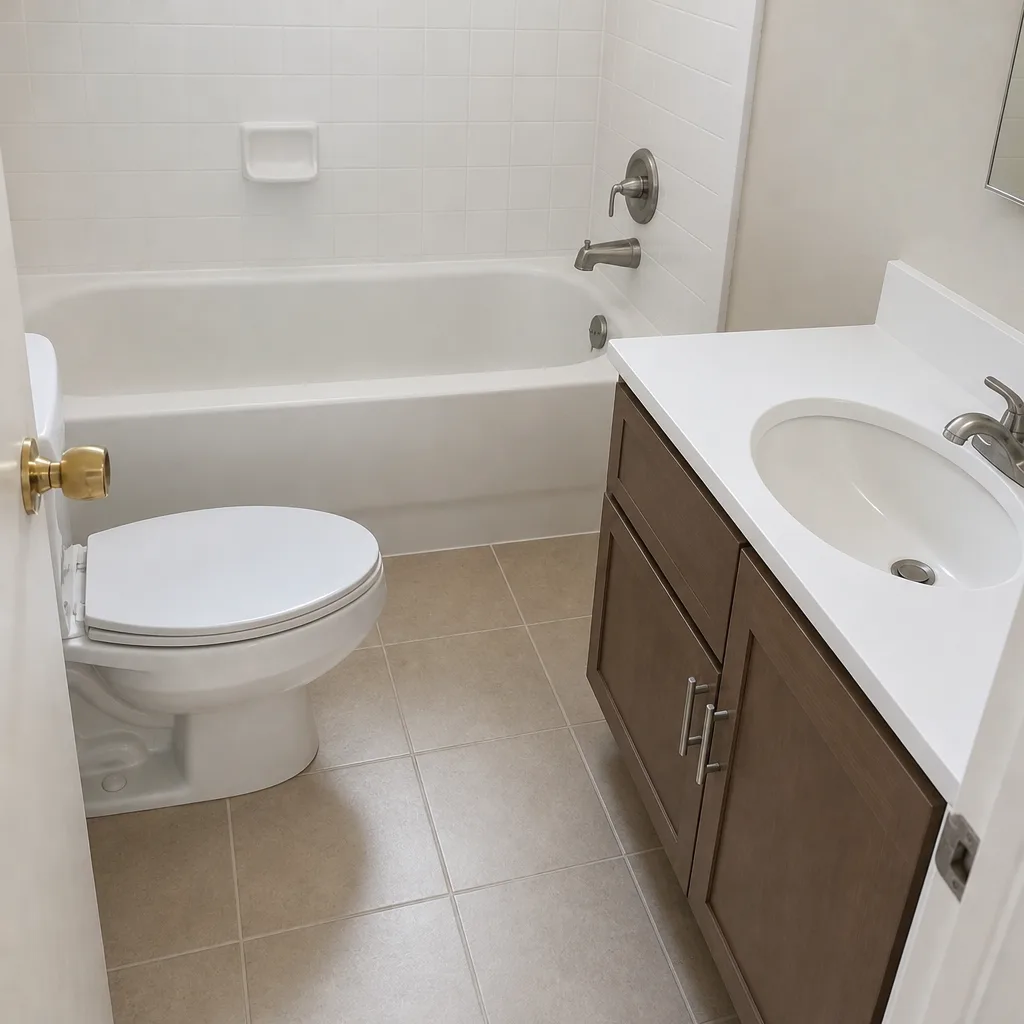
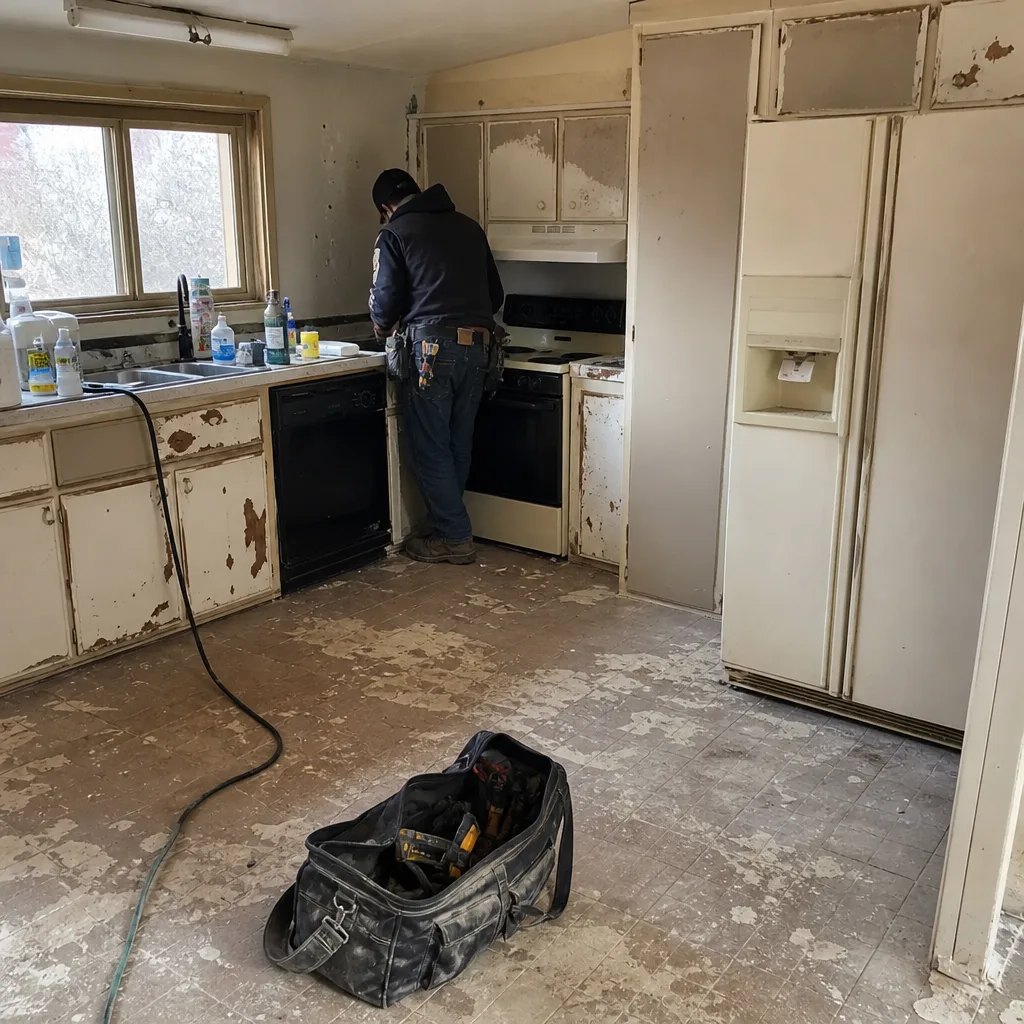
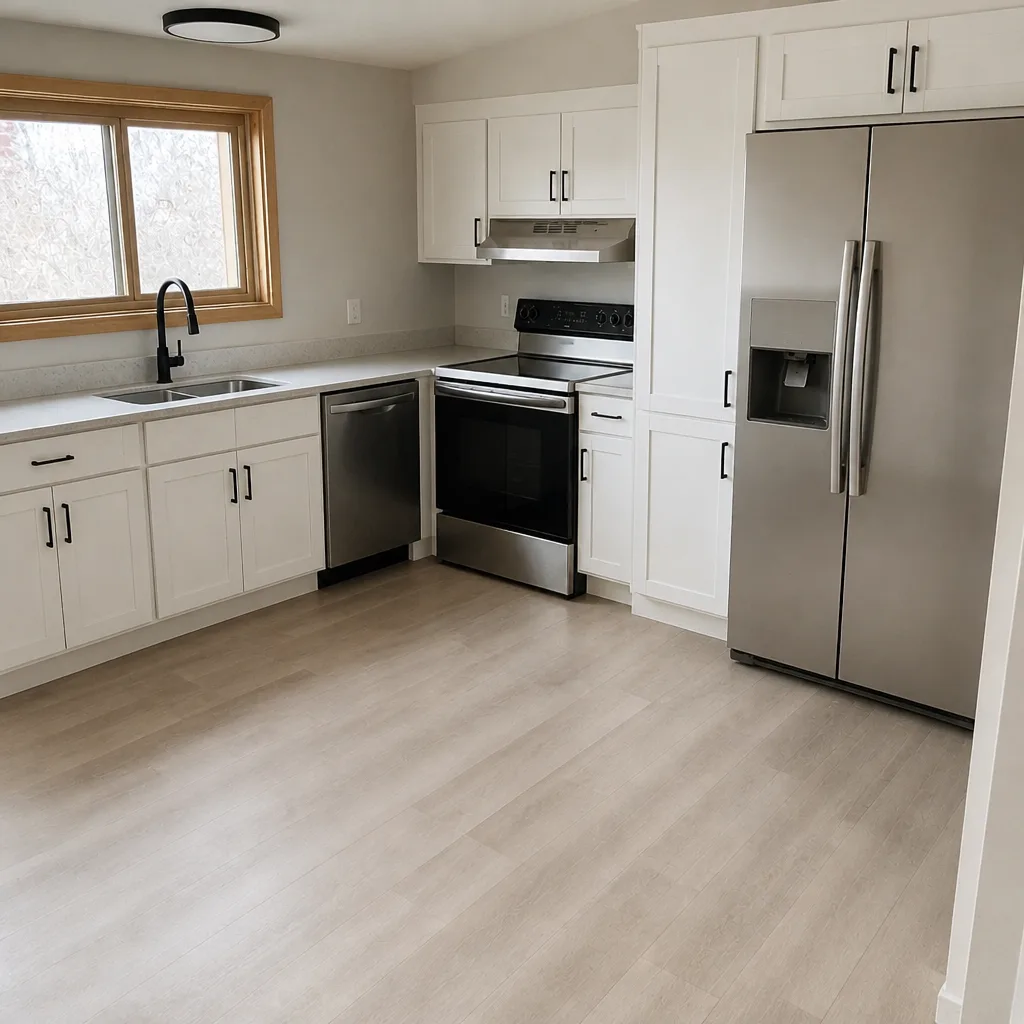
See the difference
 Before
 After
 Before
 After
 Before
 After
When to Call a Professional
Some of this you can handle yourself. Confirming a license status, drafting a scope document, and reading a bid against it are homeowner tasks. But a few scenarios call for a professional assessment before you commit to anything. If a structural wall is moving, if the existing subfloor is questionable, if a project involves moving gas or electrical service, if the roof or the foundation is showing signs of stress, those aren’t scope decisions you can make from a design magazine. They’re calls that need a licensed set of eyes on site. The same holds for anything involving gas lines or the main electrical panel: those are genuinely dangerous components, and a trained, licensed professional should be the one handling them, not a homeowner with a tutorial and a free weekend.
Our technicians have up to 13 years of experience, and the professionals we connect you with are licensed and insured as Nevada requires. Boulder City Construction offers free estimates in Boulder City. Call (888) 329-9854 to schedule yours. We answer 24/7. Fast dispatch from 7am to 7pm, Sunday through Friday.
Frequently Asked Questions

You verify it through the Nevada State Contractors Board’s public license lookup. Ask the contractor for their license number and classification in writing, then confirm the license is active, the classification matches the work in your scope, and the business name on the license matches the bid. Separately, ask for a current certificate of insurance for general liability and workers’ compensation. Call (888) 329-9854 for an exact quote on your project; estimates are free.
A Class B license is a general building contractor, which permits work on projects involving more than two unrelated trades. A Class C license is a specialty contractor, licensed for a single trade such as plumbing or electrical. For a kitchen remodel that involves multiple trades, or any addition or ADU, you want a Class B contractor taking responsibility for the full scope. Call (888) 329-9854 to talk through which license fits your project; estimates are free.
Three bids only work if all three are pricing the same scope. On projects involving two or more trades, bids routinely differ because each contractor includes different line items, permit responsibilities, and material specifications. Write a detailed scope document first and hand the same document to every contractor. You’ll get comparably priced bids, and the comparison becomes meaningful. Call (888) 329-9854 for a written, line-item estimate; estimates are free.
The written estimate sets the final price. Any change should come through a written change order that names the cost impact and the schedule impact before work proceeds. Your contract should specify the threshold above which a change requires your written signature. That’s a clause worth insisting on before you sign. Call (888) 329-9854 to discuss how a written, fixed-price estimate works on your specific project.
The permits are pulled for the work being done, and the estimate should show the permit and inspection line items clearly. Whether you’re working with us or another contractor, ask where permits appear in the bid and confirm the contractor is responsible for scheduling inspections. That detail prevents a very expensive surprise later. Call (888) 329-9854 for an exact quote; estimates are free.
For three or more trades, a single general contractor is usually the better structure because it holds the seams between trades, which is where most disputes occur. For one or two trades, a licensed specialty contractor can be a clean fit. Ask who’s responsible for the coordination and for the warranty on the whole scope. Call (888) 329-9854 and we’ll walk through what fits your project; estimates are free.
The Bottom Line
Hiring a construction contractor in Boulder City comes down to scope first, price second. Verify the Nevada State Contractors Board license and classification before anything else. Write a detailed scope document that names every line item, including permits, allowances, and exclusions. Hand the same document to every contractor so the bids are actually comparable. Read every bid for the red flags: missing permit line items, unlisted subcontractors, vague allowance language, no substitution clause. Check the manufacturer brands the contractor works with, because that tells you what kind of material consistency you’ll get. Lock the critical clauses into the contract: substitution rights, change order thresholds, inspection hold points, and warranty terms in writing. Do that, and the hiring process becomes what it should be: a decision you can make with confidence instead of a gamble on the lowest number.
If you’re ready for a written, line-item estimate from a full-scope contractor, call (888) 329-9854. We answer 24/7. Fast dispatch from 7am to 7pm, Sunday through Friday. The estimate is free, and the written number sets the price.
Written by the team at Boulder City Construction.